
When Acrylic Waterproofing Roof Coating Makes Sense
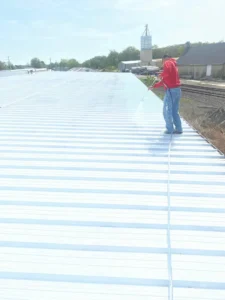
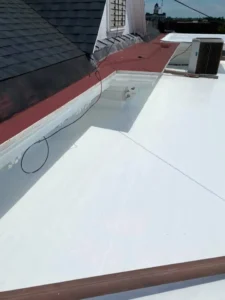
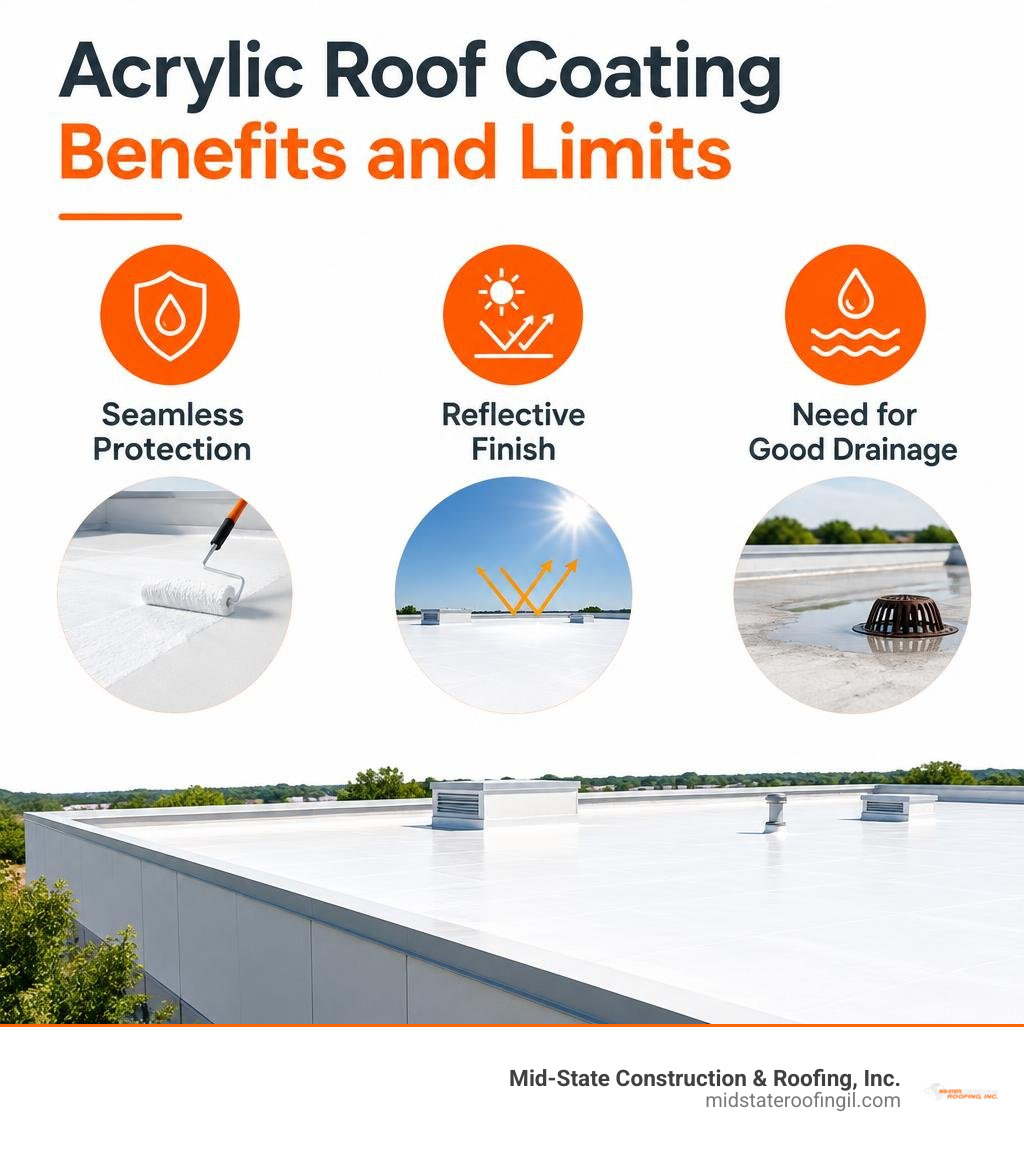
Acrylic waterproofing roof coating forms a flexible, seamless layer over a sound roof. Unlike sealant applied only to a crack or seam, it protects the broader surface from sun and rain. White acrylic can also reflect sunlight and help reduce cooling demand.
The catch is drainage. Standard acrylic coatings work best on roofs that shed water; standing water can soften the coating over time. In central Illinois, application also needs a warm, dry weather window. A roof with wet insulation or major damage needs repairs before any coating can do its job.
I’m Virgil Strauch, and my background in leadership and project oversight shapes how I weigh cost against long-term performance. This guide explains where acrylic waterproofing roof coating fits and what to check before choosing it.
Key acrylic waterproofing roof coating vocabulary:
- best liquid rubber waterproof sealant
- roof coating
- black jack roof and foundation liquid asphalt coating
Understanding Acrylic Waterproofing Roof Coating Systems and Chemistry

Acrylic roof coatings represent the largest segment of the reflective roof restoration market. At their chemical core, these systems are waterborne acrylic latex emulsions. Rather than relying on a chemical catalyst or heat reaction to cure, liquid acrylics contain high-grade polymer particles, pigments, and protective additives suspended evenly in water.
When applied across a prepared substrate, the water carrier naturally evaporates into the surrounding air. As this evaporation happens, the suspended polymer particles draw together and fuse, a physical process known as film coalescence. The result is a continuous, monolithic membrane without a single mechanical lap seam. This elastomeric shield stretches and recovers through seasonal Illinois temperature swings, avoiding the splits and stress cracks that plague rigid coverings.
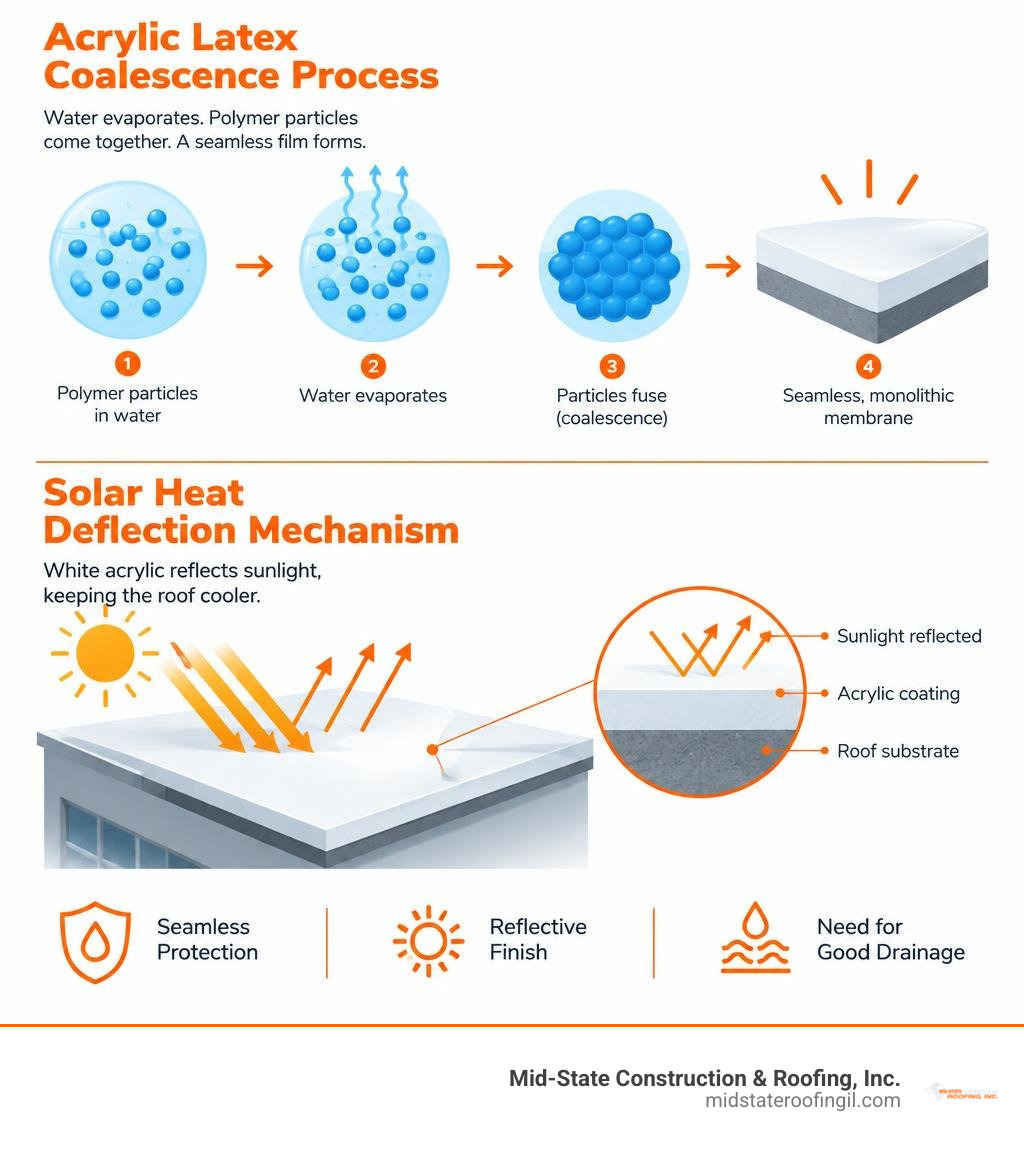
How Acrylic Waterproofing Roof Coating Formulations Form a Monolithic Barrier
A properly coalesced acrylic film balances robust tensile strength with elastic elongation. Premium acrylic polymer formulas do not rely on fugitive plasticizers that migrate out and leave membranes brittle over time. Instead, the inherent polymer backbone maintains flexibility across thousands of thermal expansion and contraction cycles.
Because it forms a continuous, unbroken skin over fasteners, flashings, and transitions, the liquid membrane prevents lateral water migration underneath the system. At the same time, quality acrylics provide balanced vapor permeability (a maximum of 50 perms under industry testing), allowing microscopic subsurface moisture vapors to breathe outward without lifting or blistering the system. To explore the detailed physics behind these liquid-applied membranes, consult this acrylic roof coating technical guide.
Cool Roof Performance, Solar Reflectance, and Energy Efficiency
White elastomeric acrylic systems act as massive thermal reflectors. Uncoated dark roofs absorb solar radiation, often driving peak summer roof surface temperatures past 150°F to 180°F. White acrylic topcoats deliver an initial solar reflectance of 0.83 to 0.88 and a high thermal emittance rating of 0.85 to 0.90, keeping rooftop surface temperatures close to ambient air levels.
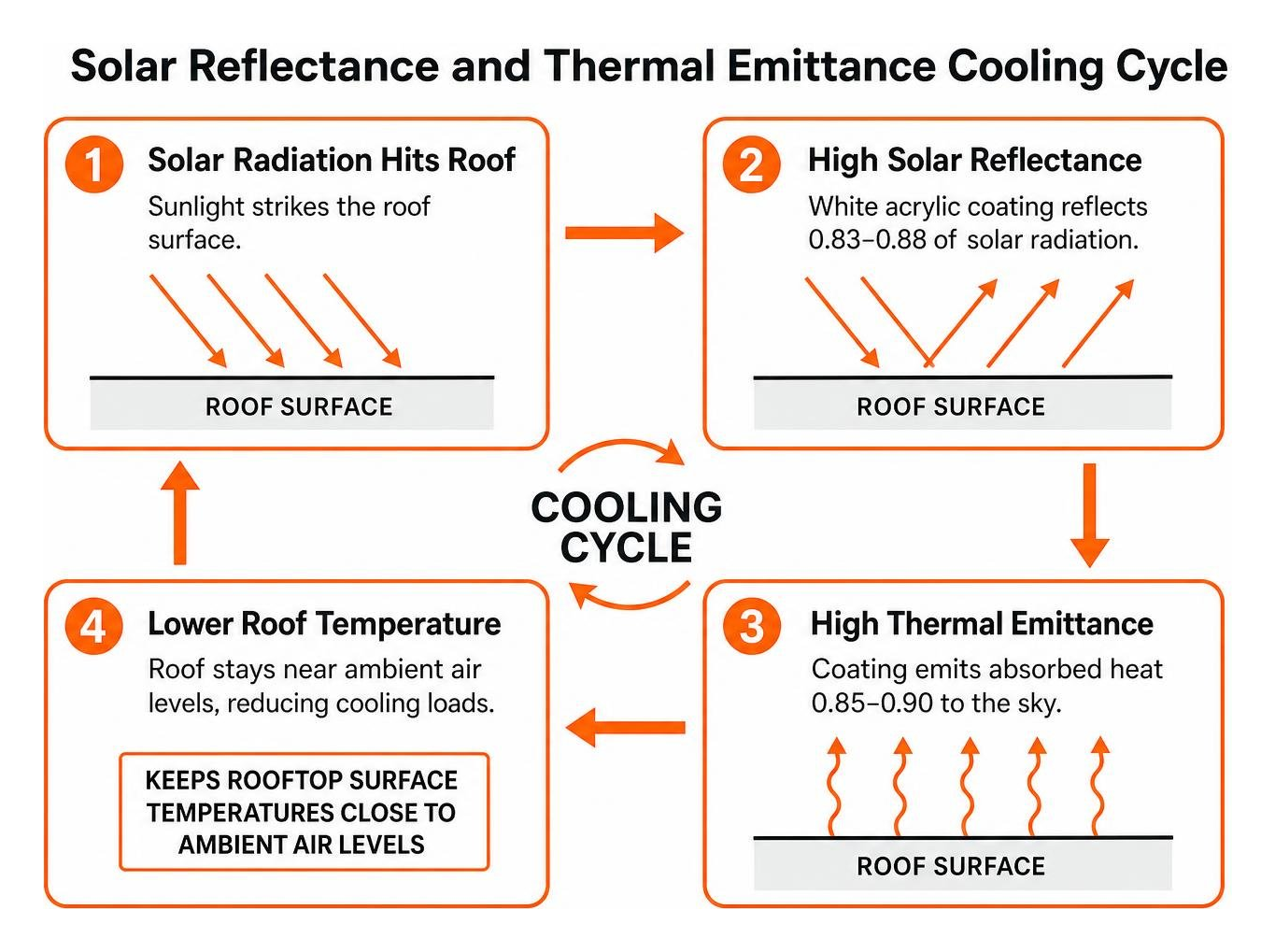
Over time, environmental dust and atmospheric weathering cause slight chalking, settling aged 3-year reflectance values around 0.65 to 0.78—readings tracked via the Cool Roof Rating Council (CRRC) and aligned with standards like California Title 24. For local property owners seeking to lower peak cooling loads and protect building HVAC units, a comprehensive commercial roof coating restoration provides an immediate return on energy costs.
Why Liquid Acrylic Membranes Outperform Traditional Sealants
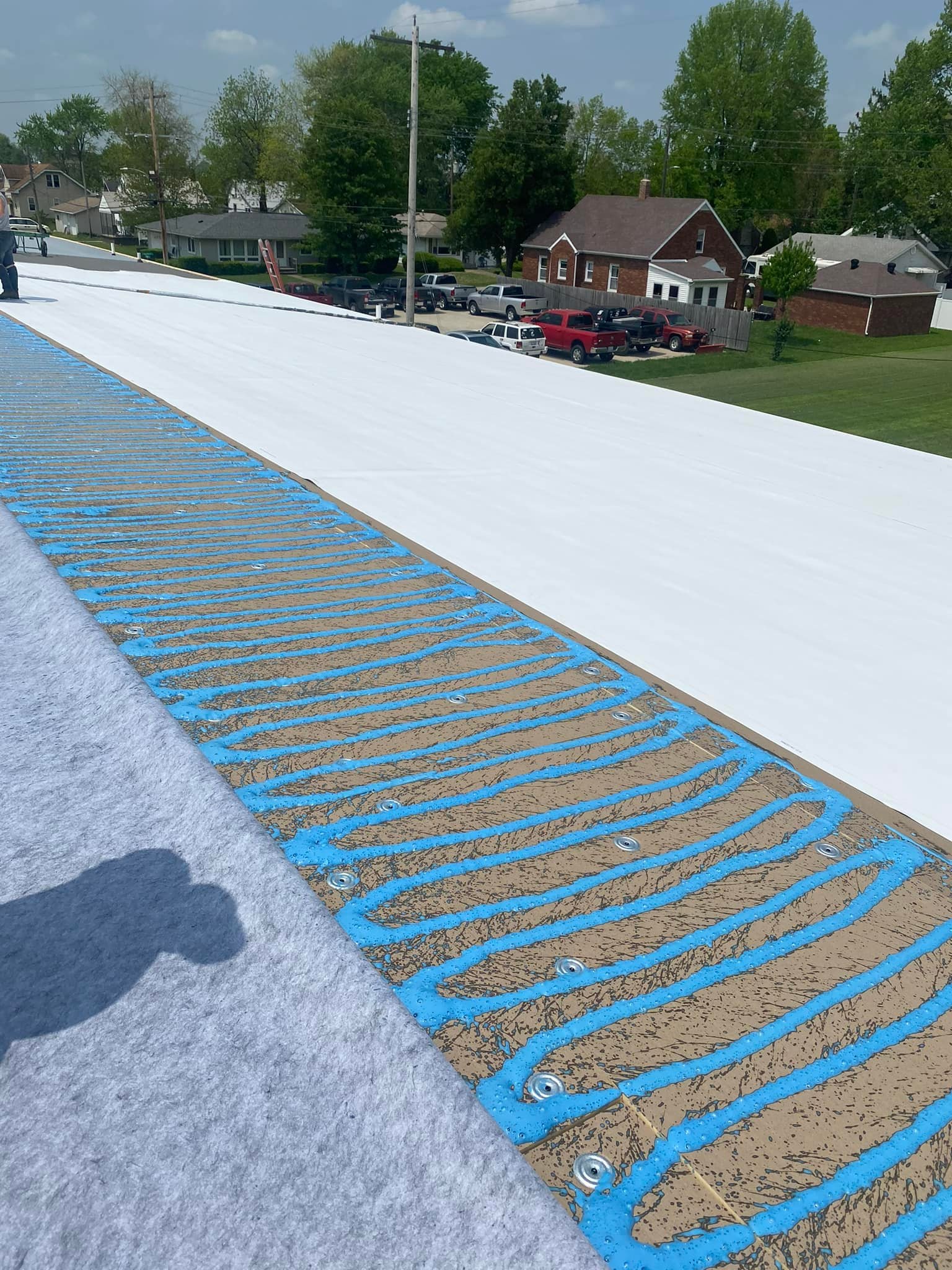
Traditional maintenance strategies often rely on spot-applying thick asphalt mastics, solvent cutbacks, or standard caulks over leaking seams. While a quick patch may temporarily stop water entry, rigid patches lack the elasticity needed to handle building movement. As rooftop metal or membrane sheets expand and contract, localized asphalt patches crack, pull away, and dry out under intense ultraviolet (UV) radiation.
Liquid acrylics provide complete, monolithic coverage across the entire roof surface rather than treating isolated failure points. When deciding on the right system, property owners should review a structured approach to choosing the best roof coating. Acrylics also eliminate harsh solvent odors and high volatile organic compound (VOC) emissions during installation, allowing schools, retail facilities, and offices to remain fully open while crews clean application tools with plain water.
Acrylic Waterproofing Roof Coating vs. Traditional Asphaltic Sealants
The physical differences between liquid-applied acrylic membranes and traditional asphaltic coatings center on flexibility, longevity, and overall maintenance ease:
| Feature / Performance Metric | Liquid-Applied Acrylic Coating | Traditional Asphaltic Mastic / Sealant |
|---|---|---|
| Monolithic Surface Coverage | Full seamless encapsulation across field and details | Localized spot patches or heavy seam build-ups |
| Elongation & Flexibility | 100% to 300%+ elastic recovery | Minimal elasticity; embrittles under UV radiation |
| Solar Reflectance (Initial) | 0.83 – 0.88 (Cool Roof rated) | 0.05 – 0.25 (Absorbs intense solar heat) |
| Environmental Impact & Odor | Water-based, ultra-low VOC, no harsh fumes | High solvent content, strong odors, high VOCs |
| Recoatability | Simple wash and direct acrylic-over-acrylic reapplication | Difficult; aged asphalt oils must be scraped or blocked |
| Clean-Up Method | Standard soap and warm water | Harsh petroleum or chemical solvents required |
Addressing Ponding Water and Cold-Weather Limitations
While acrylic coatings offer major advantages, they require honest evaluation regarding water drainage and installation weather. Because acrylics cure purely through water evaporation, prolonged ponding water—defined as standing water that remains longer than 48 hours after rain—can soften or re-emulsify the cured latex film over time. Acrylics must only be installed on roofs with positive drainage to prevent premature blistering and peeling.
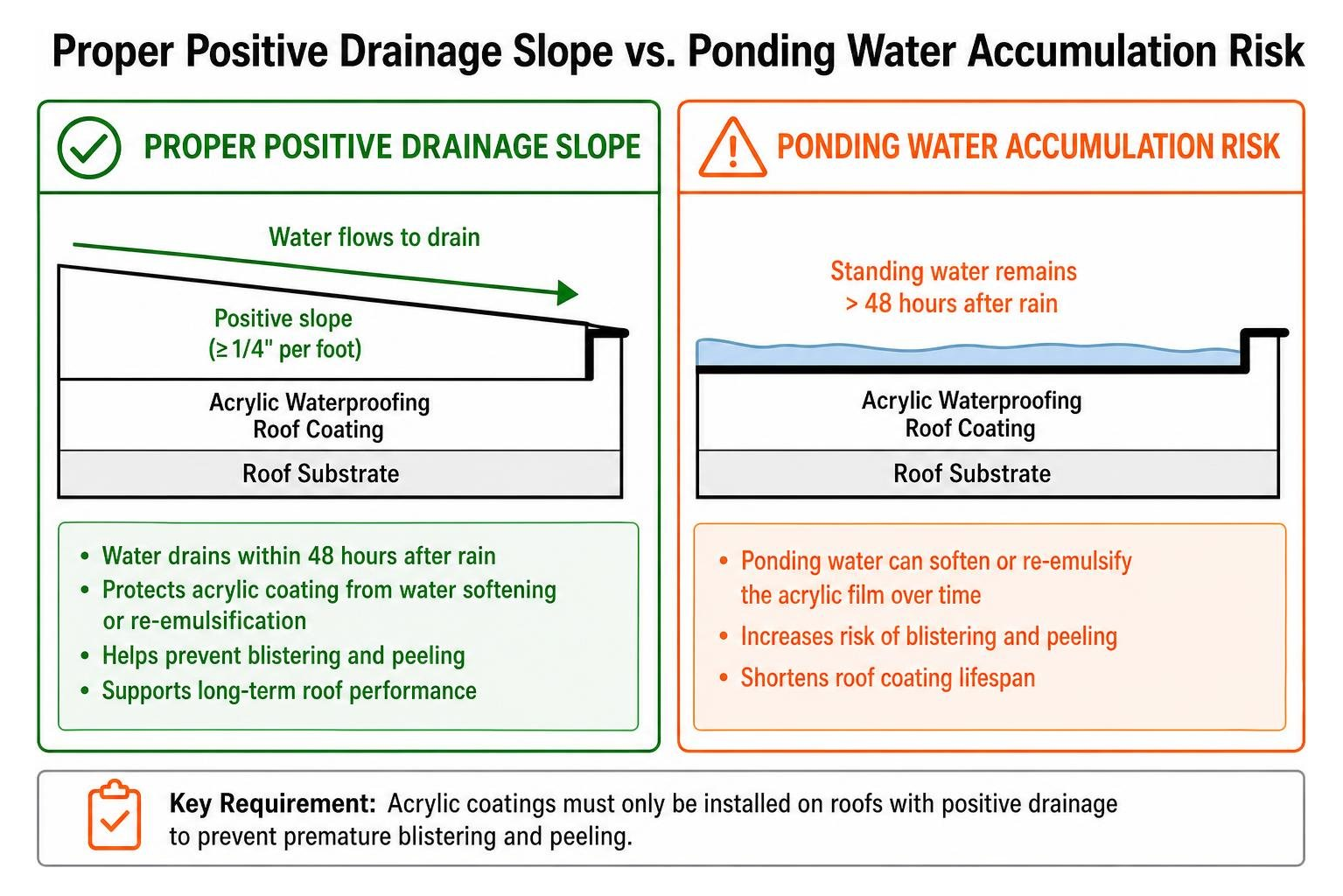
Installation temperature thresholds are equally vital. Outside ambient and substrate temperatures must be at least 50°F and rising during application, with clear forecasts free of rain, heavy dew, fog, or freezing conditions for at least 24 to 48 hours. If liquid acrylic freezes on the roof or in the container before the polymer particles fully fuse, the emulsion is permanently ruined. For structures in Central Illinois that have localized low spots, specialized flat roof coating repairs can resolve drainage issues before application begins.
Substrate Compatibility, Installation Standards, and Long-Term Maintenance
Liquid acrylic systems can be applied across a wide variety of structurally sound commercial and residential substrates, provided correct preparation standards are met:
- Sloped Metal Roofs: Exceptional adhesion over standing-seam and R-panels, sealing fastener penetrations and bridging horizontal and vertical panel joints.
- Modified Bitumen & Built-Up Roofing (BUR): Protects aged asphalt sheets from UV embrittlement once properly washed and primed to stop bleed-through.
- Single-Ply Membranes (EPDM, TPO, PVC): Accommodates smooth membranes when matched with substrate-specific adhesion primers.
- Sprayed Polyurethane Foam (SPF): Serves as a vital protective UV and weathering skin over newly applied or aged rigid foam.
Surface Preparation and Primer Guidelines for Common Substrates
Long-term coating adhesion relies heavily on thorough substrate preparation. Every roof must be pressure-washed between 800 and 1,500 psi using a dedicated cleaning agent to strip away dirt, grease, chalking residue, and loose surface contaminants. Technicians must conduct field adhesion test patches to verify bond strength before applying complete coating systems.
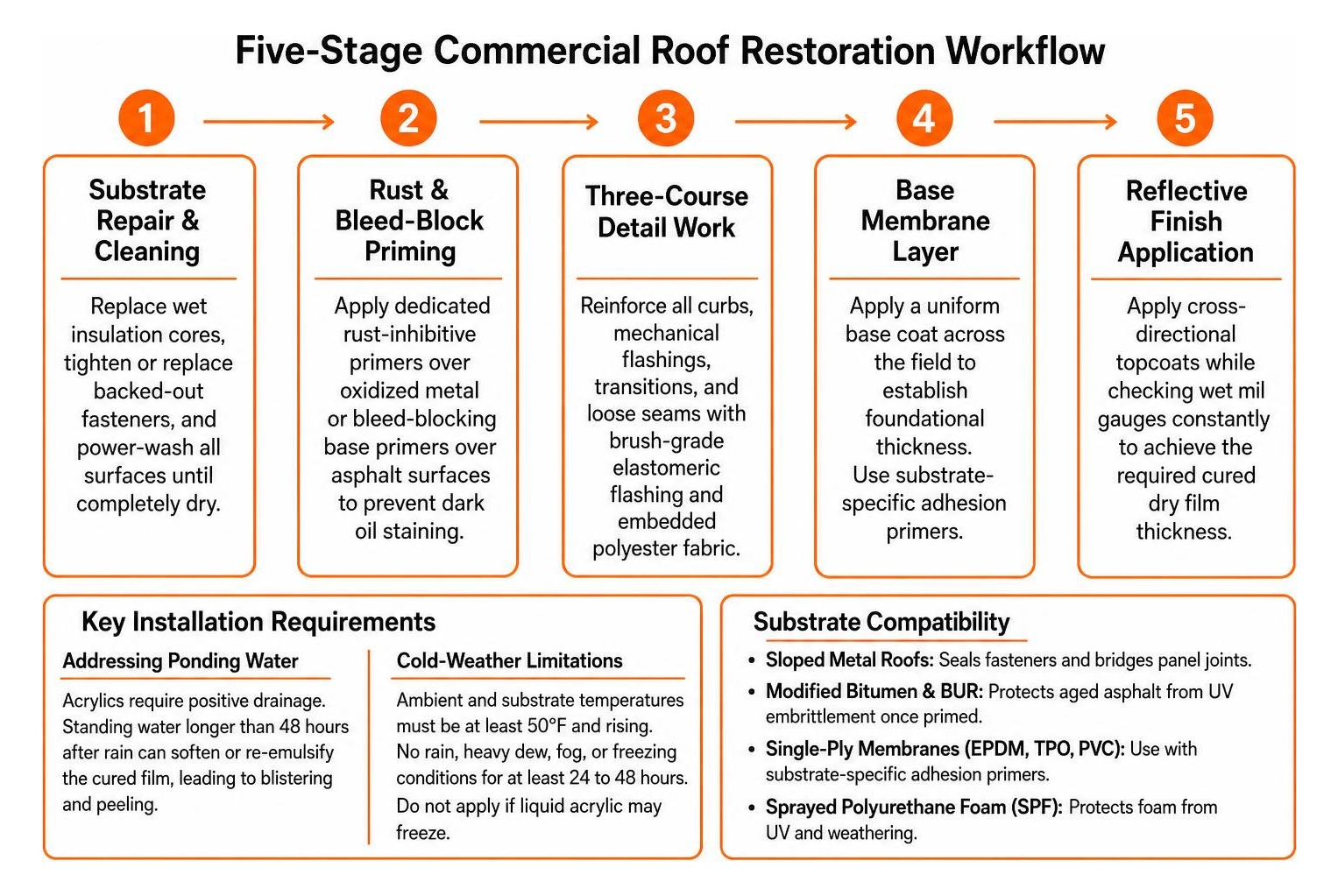
- Substrate Repair & Cleaning: Replace wet insulation cores, tighten or replace backed-out fasteners, and power-wash all surfaces until completely dry.
- Rust & Bleed-Block Priming: Apply dedicated rust-inhibitive primers over oxidized metal or bleed-blocking base primers over asphalt surfaces to prevent dark oil staining. Property managers can review specialized metal roof coatings for metal-specific prep.
- Three-Course Detail Work: Reinforce all curbs, mechanical flashings, transitions, and loose seams with brush-grade elastomeric flashing and embedded polyester fabric.
- Base Membrane Layer: Apply a uniform base coat across the field to establish foundational thickness. Specific primer setups are detailed for EPDM acrylic roof coating systems and traditional modified bitumen coating options.
- Reflective Finish Application: Apply cross-directional topcoats while checking wet mil gauges constantly to achieve the required cured dry film thickness.
Industry Performance Standards, Application Costs, and Lifespan
High-performance acrylic coatings are certified under the ASTM D6083 standard specification. This standard establishes strict minimums: a minimum weight solids of 60%, volume solids of 50%, an initial tensile strength of at least 200 psi, and elongation of 100% or greater. The specification also categorizes products into Type I (-26°C/-15°F low-temperature flexibility for colder northern climates) and Type II (-10°C/14°F flexibility with enhanced dirt pickup resistance).
From a financial perspective, acrylic remains the most economical restoration chemistry available:
- Installed Cost: Typically ranges between $0.65 and $1.75 per square foot for commercial low-slope systems, depending on detailing and warranty specifications.
- System Thickness Targets: Standard 10-year restorations target 20 to 25 dry mils (DFT), while extended 15- to 20-year warranty systems specify 35 to 45 dry mils.
- Service Life & Recoating: Systems provide 10 to 15+ years of dependable waterproofing when properly maintained. Every 5 to 7 years, a light wash and a single maintenance topcoat can renew the solar reflective index and extend the roof’s lifespan indefinitely.
At Mid-State Construction & Roofing, Inc., we deliver comprehensive roofing solutions across Beecher City, Effingham, Shelbyville, Altamont, Vandalia, Ramsey, Salem, Hillsboro, and Litchfield, Illinois. Our industry-leading training, hands-on quality assurance, and dedicated project supervision ensure that every acrylic restoration is executed with precise mil thickness control and weather-window discipline. Contact us today to schedule a detailed roof assessment and see if a seamless acrylic waterproofing system is the right fit for your property.