
The Best Waterproofing Paint for Roof Protection Starts With Drainage
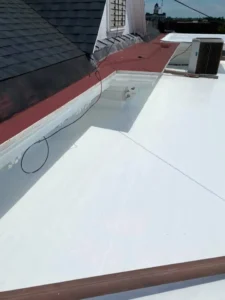
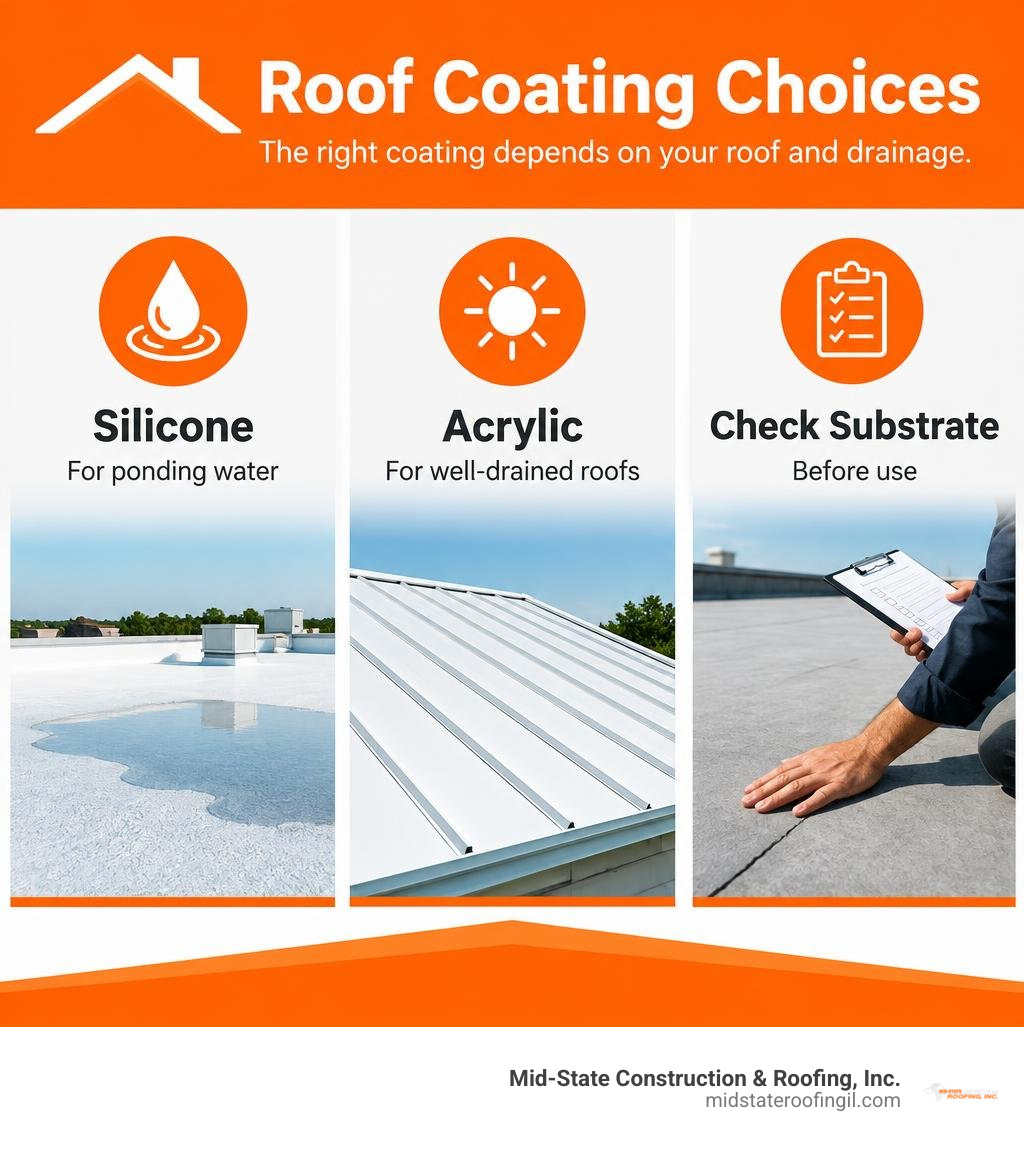
The best waterproofing paint for a roof depends on its material and how well it drains. For a flat roof where water may stand, start with a compatible silicone coating. For a well-drained metal roof, a reflective acrylic coating may be a better fit. Avoid coating asphalt shingles unless the product maker approves that use.
In central Illinois, heavy rain and freeze-thaw cycles make surface prep just as important as the coating. Fix leaks and damaged flashing first; a new coating cannot repair a failing roof beneath it.
I’m Virgil Strauch, and my background in project leadership and operations shapes this guide to the best waterproofing paint for roof protection. Let’s compare the options by roof type and drainage.
Glossary for best waterproofing paint for roof:
- best liquid rubber waterproof sealant
- black jack roof and foundation liquid asphalt coating
- roof coating
Choosing the Best Waterproofing Paint for Roof Protection
Water intrusion is every property owner’s nightmare. Water damage repairs from a leaky roof can quickly escalate from $1,240 to upwards of $5,340 if moisture penetrates structural decking, insulation, or finished drywall. When searching for the right product, understanding the chemistry behind fluid-applied systems is vital to finding the best roof coating for your specific building.
Standard exterior paints provide cosmetic color and basic solar reflection, but they lack the physical thickness and flexibility to stop water. A true roof waterproofing paint—technically known as an elastomeric roof coating—forms a thick, seamless, rubberized barrier over the entire roof deck. This membrane expands and contracts during severe Midwest temperature swings while sealing micro-fissures and reflecting destructive ultraviolet rays.
Evaluating the Best Waterproofing Paint for Roof Chemistry: Silicone, Acrylic, and Polyurethane
Different liquid roof systems rely on specific chemical formulations designed for distinct environmental exposures. Meeting industry standards such as ASTM D6083 (for elastomeric acrylics) or ASTM D6947 (for moisture-cured polyurethanes) ensures the product delivers long-term durability. For deeper insight into these chemical distinctions, property owners often consult technical specifications for fluid-applied membranes.
- 100% Silicone Coatings: Silicone is inorganic and cures through exposure to ambient moisture. Because silicone exhibits near-zero water absorption (under 0.001%), it will not soften or delaminate under standing ponding water. It reflects around 90% of sunlight, drastically reducing building cooling loads. However, standard silicone naturally attracts airborne dirt over time, which can diminish reflectivity unless formulated with Dirt Pick-Up Resistance (DPR) technology or washed periodically.
- Elastomeric Acrylic Coatings: Acrylic formulas are water-based, cost-effective, and easy to clean. They offer remarkable dynamic elasticity—often between 300% and 650% elongation—allowing them to stretch effortlessly across joints. While acrylics provide exceptional UV reflectivity and resistance to sun degradation, they break down under continuous ponding water (defined as water remaining over 48 hours).
- Polyurethane Systems: Polyurethane coatings are highly durable, impact-resistant membranes often applied in two coats (an aromatic basecoat for tensile strength and an aliphatic topcoat for UV stability). Polyurethanes are the premier choice for roofs that experience routine foot traffic or equipment maintenance.
- Liquid Rubber & Copolymer Elastomers: These multi-surface coatings bridge gaps efficiently, cure into a flexible rubber shell, and perform well across diverse climates from -40°F up to 120°F.
- Cementitious Waterproofers: Heavy-duty masonry formulations, like DRYLOK Extreme, penetrate porous concrete or masonry slabs. Engineered to resist up to 15 psi of hydrostatic pressure and withstand Category 4 hurricane-force winds (140+ mph), they seal masonry pores from the inside out.
| Coating Chemistry | Ponding Water Resistance | Elongation / Flexibility | UV Reflectivity | Best Application Fit |
|---|---|---|---|---|
| 100% Silicone | Exceptional (Will not break down) | Moderate (200%–350%) | High (~90% initial) | Flat commercial roofs, low slopes, ponding areas |
| Elastomeric Acrylic | Poor (Requires positive slope) | High (300%–650%) | High (85%–88%) | Well-drained sloped metal and commercial roofs |
| Polyurethane | Very Good | High (300%–500%) | Moderate to High (with aliphatic top) | Heavy foot traffic areas, balconies, equipment decks |
| Liquid Rubber | Good to Very Good | Exceptional (Up to 700%) | Moderate (Color dependent) | Low-slope transitions, gutters, flashings, RV roofs |
| Cementitious | High (Hydrostatic barrier) | Rigid / Low | Low (Unless topcoated) | Concrete roof slabs, parapets, masonry block |
Selecting the Best Waterproofing Paint for a Roof by Substrate and Slope
The physical material and pitch of your roof dictate which coating will successfully bond without peeling:
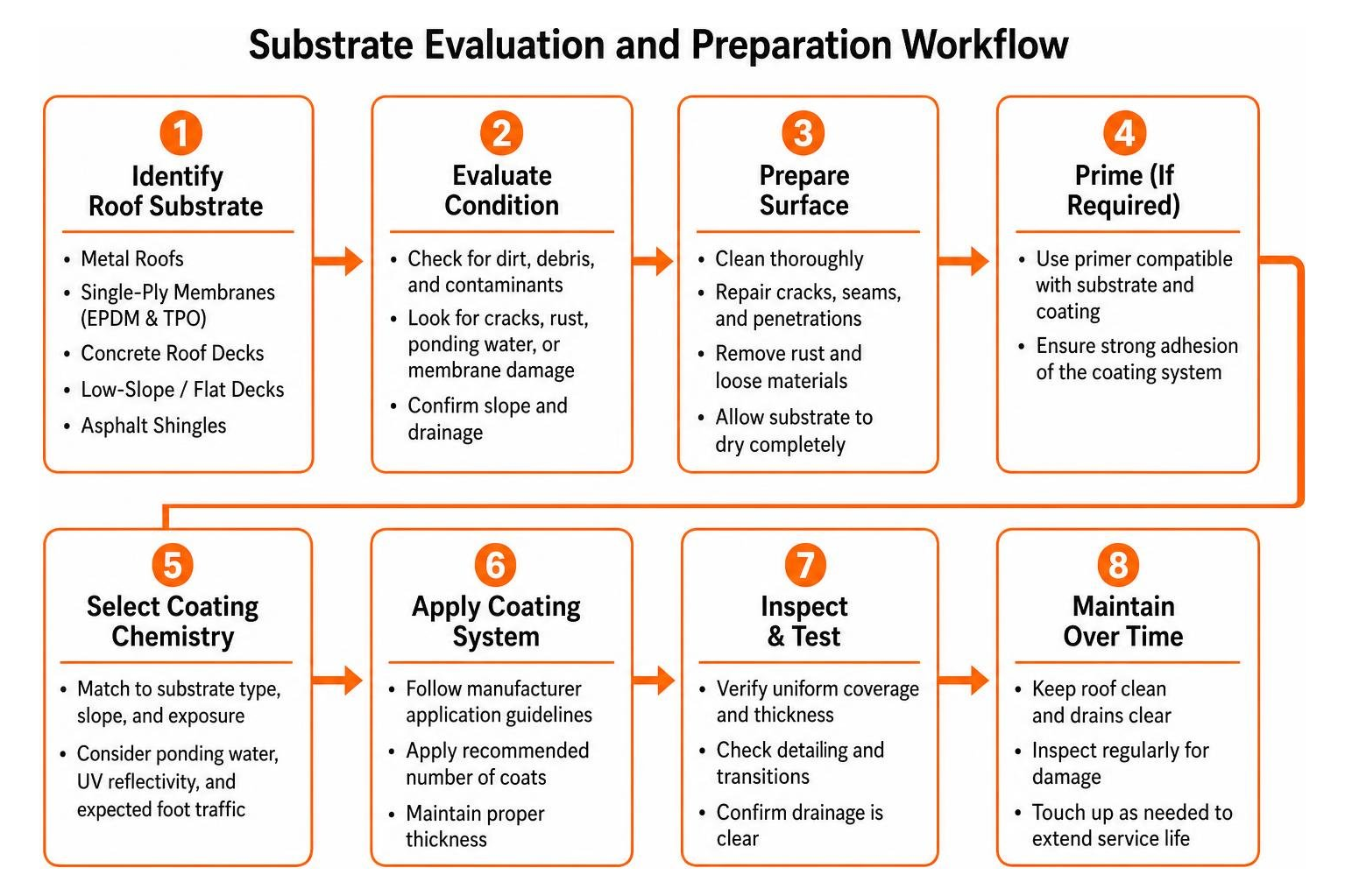
- Metal Roofs: Standing seam and corrugated metal panels expand and contract significantly. Applying protective metal roof coatings using high-elongation acrylic or liquid rubber stops rust, seals fastener penetrations, and lowers surface temperatures by up to 40°F.
- Single-Ply Membranes (EPDM & TPO): Aging rubber roofs benefit greatly from EPDM roof restoration systems. Silicone and dedicated EPDM acrylics adhere well once the membrane is thoroughly cleaned and primed. Never apply solvent-heavy asphalt cements over EPDM or TPO, as they will cause the single-ply membrane to swell and deteriorate.
- Concrete Roof Decks: Concrete slabs require deep cleaning and crack patching before applying fluid membranes. For long-term protection, executing proper concrete roof leak repairs with hydraulic cement followed by a breathable or liquid-applied elastomeric barrier keeps moisture from reaching structural rebar.
- Low-Slope and Flat Decks: Flat structures with slow drainage require specialized attention. Property managers rely on sealing low-slope roofs using high-solids silicone to eliminate standing water hazards, adhering to standard roof coating performance classifications.
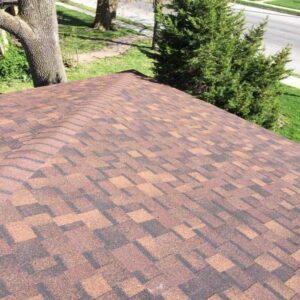
- Asphalt Shingles: Most manufacturers advise against broad liquid-coating over steep-slope asphalt shingles. Thick coatings can lock moisture beneath shingle tabs, interfere with natural ventilation, or create extreme fall hazards when walked upon. Shingles should generally be spot-repaired or replaced rather than completely painted over.
- Modified Bitumen & Built-Up Roofing (BUR): Granulated or smooth asphalt roofs can be restored using non-fibered asphalt emulsions topped with reflective elastomeric acrylic or silicone. A bleed-blocking primer is required to prevent dark asphalt oils from staining the white topcoat.
- RV and Camper Roofs: Travel trailers face severe road vibrations and structural flexing. Flexible white polyurethane or specialized RV liquid rubber coatings deliver lasting watertight seals over aluminum, fiberglass, and rubber RV roofs.
| Substrate Type | Recommended Coating Chemistry | Surface Primer Required? | Key Consideration |
|---|---|---|---|
| Metal (Standing Seam/R-Panel) | Acrylic Elastomeric or Silicone | Rust-inhibitive primer over oxidized areas | Must withstand thermal sheet movement |
| EPDM / TPO Single-Ply | 100% Silicone or Dedicated Acrylic | Yes (Cleaner/Activator or Primer) | Avoid solvent asphalt products |
| Flat Concrete Slab | Liquid Rubber, Polyurethane, or Silicone | Yes (Masonry bonding primer) | Patch cracks with hydraulic cement first |
| Modified Bitumen (BUR) | Asphalt Emulsion + Acrylic/Silicone | Yes (Bleed-blocking acrylic primer) | Prevent asphalt oil bleed-through |
| Asphalt Shingle | Specialized Shingle Restorer Only | Usually not recommended | Do not apply slick silicone over shingles |
Waterproofing Paint vs. Traditional Sealants, Mastics, and Reinforcement Mesh
A complete roofing system relies on multiple layers working together. Liquid roof paint is designed to protect broad surface fields, but it cannot bridge large structural gaps or failing joints on its own.
Understanding how high-performance roofing membranes function shows why high-stress transitions demand a multi-layered approach:
- Spot Sealants and Mastics: Thick copolymer caulks, polyurethane tubes, and asphalt mastics are designed for localized filling. They secure pipe boots, seal mechanical curbs, and provide reliable chimney flashing leak solutions.
- Reinforcement Fabric: High-tensile, stitch-bonded polyester or fiberglass mesh embedded between two wet layers of liquid coating creates a reinforced liquid-applied membrane. This reinforces seams, splits, and flashing corners against continuous building movement.
- Peel-and-Stick Butyl Tapes: Emergency patch tapes provide immediate water stoppage during storms. However, tapes should be topcoated with a liquid membrane to protect their backing from prolonged UV degradation.

Professional Roof Coating Application and Long-Term Maintenance
Applying fluid-applied roofing membranes requires strict adherence to quality assurance standards. At Mid-State Construction & Roofing, Inc., we know that premature coating failures stem almost entirely from poor surface preparation or improper dry film thickness rather than material flaws.
Surface Preparation, Crack Repair, and Proper Mil Thickness Standards
To ensure a continuous, watertight bond that carries a 10- to 20-year service life, follow these preparation steps:
- Moisture Survey & Core Sampling: Before applying coatings, verify that the underlying roof deck and insulation are bone-dry. Coating over wet insulation traps moisture inside the roofing assembly, leading to rot and blisters. Saturated sections must be removed and replaced.
- Deep Cleaning: Pressure-wash the substrate to remove all dirt, grease, moss, algae, and chalked coatings. On masonry, eliminate efflorescence salts using wire brushing or acid etching.
- Substrate Repair: Back-chisel masonry cracks into an inverted “V” profile and fill them with fast-setting hydraulic cement. Tighten or replace loose metal fasteners and seal joints with polyurethane or stitch-bonded polyester mesh embedded in sealant.
- Adhesion Test & Priming: Perform test patches on aged single-ply or painted metal surfaces. Apply specialized primers (such as bleed-blockers on asphalt or rust-inhibitors on metal) to guarantee chemical bonding.
- Mil Thickness Verification: Longevity directly correlates with coating thickness. Applying one gallon over 100 square feet yields roughly 16 wet mils. A restored membrane system applied at 30 dry mils can last up to 10 years longer than a thin 20-mil layer. Always apply liquid coatings in two uniform coats, back-brushing the base layer to eliminate pinholes.
Application Techniques, Weather Windows, and Environmental Considerations
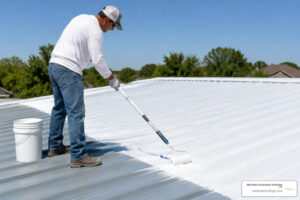
Waterproofing coatings can be applied using heavy-duty commercial airless sprayers (running at 3,000+ psi with reversible tips), 3/4-inch nap paint rollers, or specialized block brushes for detailed curb work.
Application success depends on strict weather monitoring:
- Temperature Thresholds: Air and surface temperatures must remain above 50°F during application and throughout the initial cure. In extreme heat where roof decks exceed 140°F, water-based coatings can flash off too quickly, causing surface blistering.
- Cure Windows: Water-based acrylics require 24 to 48 hours of dry, rain-free weather with low humidity to cure completely. Moisture-cure silicone coatings can handle lower temperatures (down to 35°F) and develop rain resistance in just a few hours.
- Environmental & VOC Standards: Water-based acrylic and liquid rubber products offer low VOC levels, dry virtually odorless, and clean up with soap and water. Solvent-based coatings offer higher immediate moisture tolerance but emit volatile compounds requiring respirators and proper ventilation.
- Aquatic and Biological Safety: Many commercial waterproofing paints incorporate biocides to deter mildew and algae growth. Because these biocides can be hazardous to aquatic organisms, direct runoff into fish ponds or natural waterways should be avoided during curing.
Restoring Leaks vs. Full Replacement: Costs and Longevity
Fluid-applied roof restorations provide substantial financial advantages over complete roof tear-offs. Roof sealant and coating installations generally average between $0.65 and $5.00 per square foot depending on coating chemistry, surface detailing, and required warranty thickness.
Restoring an existing commercial or low-slope roof with a high-solids silicone system typically costs between $2.80 and $4.00 per square foot, compared to $5.00 to $11.00 per square foot for a complete membrane tear-off and reroof.
Most major coating systems provide manufacturer warranties ranging from 5 to 20 years. Maintaining these systems involves simple biannual roof inspections and light cleaning to preserve solar reflectivity. When the initial warranty period nears its end, measuring remaining mil thickness allows property owners to simply wash the surface and apply a thin renewal topcoat—extending roof lifespan indefinitely without filling landfills with construction waste.
At Mid-State Construction & Roofing, Inc., we provide property owners across Central Illinois—including Effingham, Shelbyville, Vandalia, Altamont, and neighboring communities—with industry-leading quality assurance, meticulous project supervision, and proven roofing restorations that keep heavy storms outside.
If your roof is showing signs of aging or moisture intrusion, schedule an inspection with our team at Mid-State Construction & Roofing to find the best protective fluid-applied system for your property.