
Metal Roofer Cost vs. Asphalt Shingle Prices in 2026
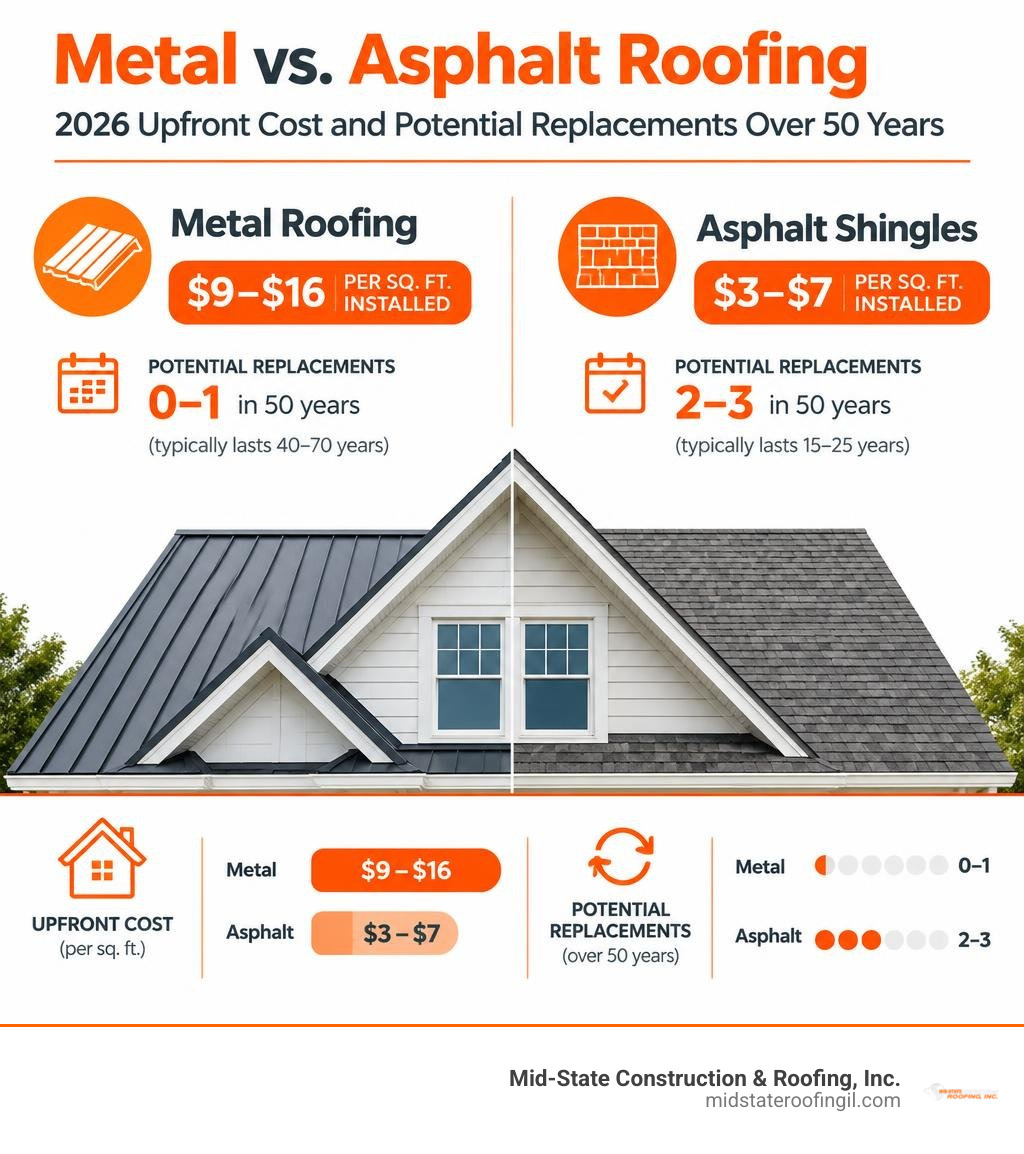
Metal roofer cost typically runs about $9 to $16 per square foot installed in 2026, though standing seam and complex roofs can cost more. An asphalt shingle installer will usually quote a lower upfront price. To compare bids fairly, check that both include tear-off, underlayment, flashing, permits, and labor.
The lower bid is not always the lower long-term cost. Metal roofing can last 40 to 70 years, while asphalt shingles often need replacement after 15 to 25 years. Your roof’s size, shape, and condition will affect both quotes.
I’m Virgil Strauch, a self-employed business leader based in Beecher City, Illinois. My experience planning work and managing budgets informs how I explain metal roofer cost and compare project estimates.
Metal roofer cost terms at a glance:
Comprehensive Metal Roofer Cost Breakdown vs Asphalt Shingle Rates
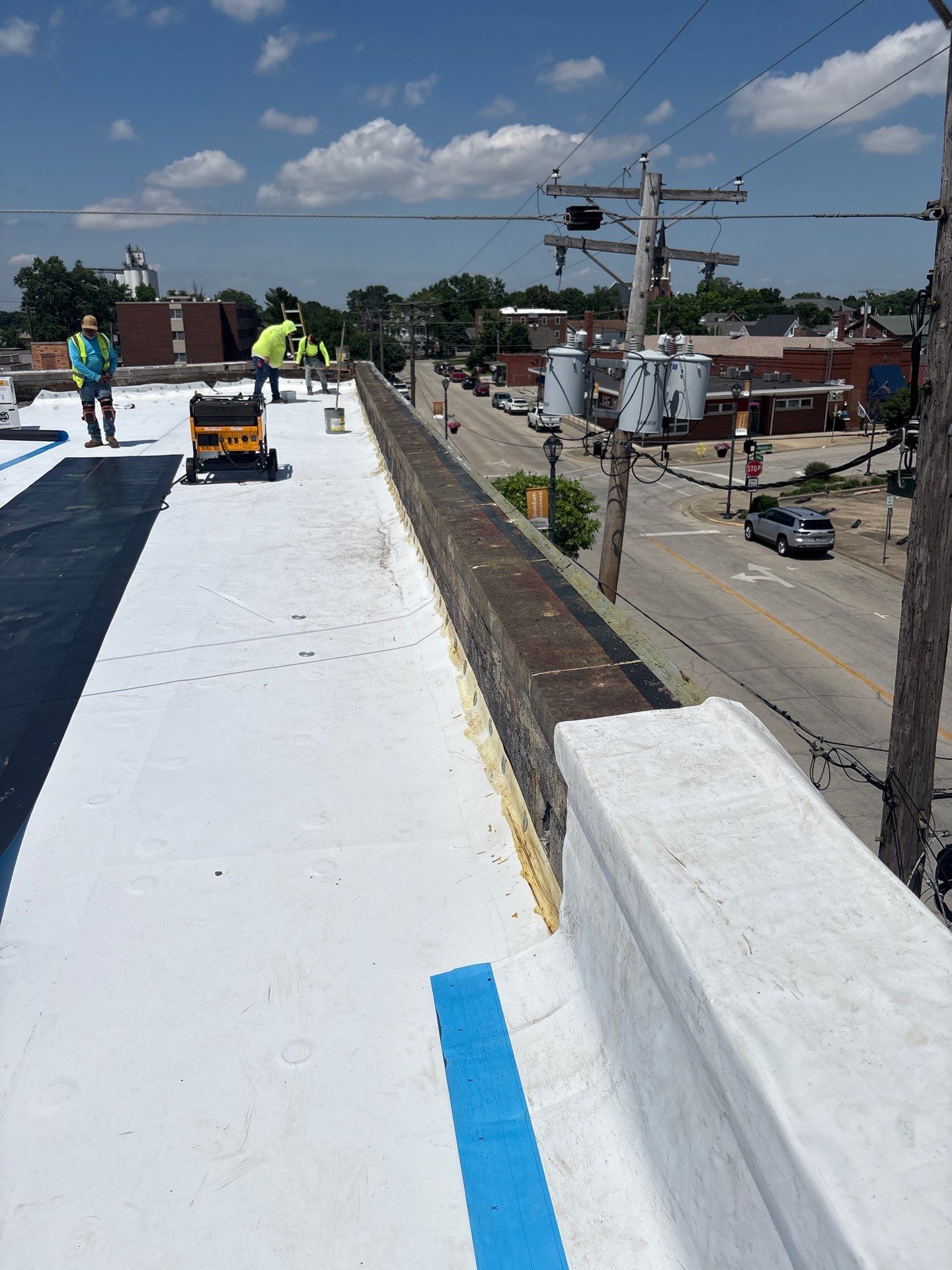
When planning a roof replacement, understanding how contractor pricing is structured helps you make sense of wildly different estimates. According to verified 2026 national roofing cost data, the national average investment for a residential metal roof sits around $11,769, with most standard projects falling between $6,045 and $18,342. When calculating full replacements on larger homes, the total range frequently spans between $9,000 and $25,000.
By comparison, an asphalt shingle installation for an average home generally ranges from $5,000 to $10,000. The wide pricing spread between these two systems comes down to two major components: raw material composition and installation labor intensity. Understanding the core asphalt shingles vs metal roofing differences makes it clear why their price tags diverge.
Labor accounts for roughly 40% to 60%—and sometimes up to two-thirds—of the total expense when installing metal. Installing standing seam panels or formed metal shingles demands specialized sheet-metal handling skills, precise panel alignment, custom flashing fabrication, and careful safety management. Asphalt shingles, while requiring solid craftsmanship to prevent blow-offs, are significantly faster and simpler to install.
A comprehensive estimate from any reputable contractor should always account for:
- Tear-off and Disposal: Stripping old layers of shingles and disposing of debris generally costs $1.00 to $2.00 per square foot.
- Deck Inspection & Repair: Replacing damaged plywood or OSB decking sheets before laying new material.
- Underlayment: High-temperature synthetic membranes required beneath metal systems versus standard felt under shingles.
- Trim, Flashing, and Fasteners: Drip edges, ridge caps, valley liners, and heavy-duty concealed clips.
- Permits and Local Fees: Ensuring all work complies with municipal building codes across local communities.
Average Metal Roofer Cost by Material and Panel System
The specific metal profile and alloy you choose will dramatically steer your total budget. Standard corrugated steel or exposed fastener panels sit on the lower end of the pricing spectrum, while concealed-fastener systems represent a premium architectural investment. Homeowners interested in hidden-clip systems can consult a detailed standing seam installation pricing guide to see how custom-formed panels compare against off-the-shelf profiles.
Weighing the pros and cons of standing seam metal helps clarify whether concealed fasteners or exposed fasteners best match your structure.
| Roofing System / Material | Average Installed Cost (Per Sq. Ft.) | Expected Lifespan | Maintenance Needs |
|---|---|---|---|
| Architectural Asphalt Shingles | $4.00 – $7.50 | 15 – 25 Years | Moderate (Granule loss, wind damage) |
| Exposed Fastener Corrugated Steel (26–29 Gauge) | $9.00 – $12.00 | 30 – 45 Years | Moderate (Screw gasket inspection every 10 yrs) |
| Standing Seam Steel (24 Gauge, Kynar 500) | $12.00 – $18.00 | 50 – 70 Years | Very Low (Concealed fasteners) |
| Aluminum Standing Seam / Shingles | $11.00 – $16.00 | 50+ Years | Very Low (Corrosion-proof) |
| Premium Copper or Zinc Panels | $18.00 – $30.00+ | 80 – 100+ Years | None (Self-healing patina) |
Gauge thickness also dictates overall system durability. Residential standing seam applications typically utilize sturdy 24-gauge or 26-gauge steel, which provides excellent dent resistance against falling branches and severe hailstorms. Thinner 29-gauge metal is more common on agricultural post-frame buildings to manage material expense.
Key Factors Influencing the Final Metal Roofer Cost
Every home presents unique structural characteristics that directly influence labor difficulty and required work hours. Learning about the cost to install metal roofing in Illinois helps property owners anticipate seasonal factors and local wage standards.
Several critical structural variables shape overall project estimates:
- Roof Pitch and Slope: Steep roofs (pitches of 7:12 or greater) require specialized staging, toe boards, and fall-arrest harnesses. Steeper slopes can increase labor costs by 15% to 35%.
- Architectural Complexity: Dormers, hips, valleys, chimneys, and skylights require extensive hand-bent flashing and custom panel cuts, adding hours of field fabrication.
- Underlayment Upgrades: High-performance synthetic, high-temperature underlayments are essential under metal to resist friction and excessive thermal transfer.
- Permitting and Code Requirements: Local building permits vary by municipality across Central Illinois and must be factored into project logistics.
Reviewing the key factors that influence roof costs will help you identify where your home falls along the installation difficulty spectrum.
Upfront Shingle Expenses vs Lifetime Metal Installation Value
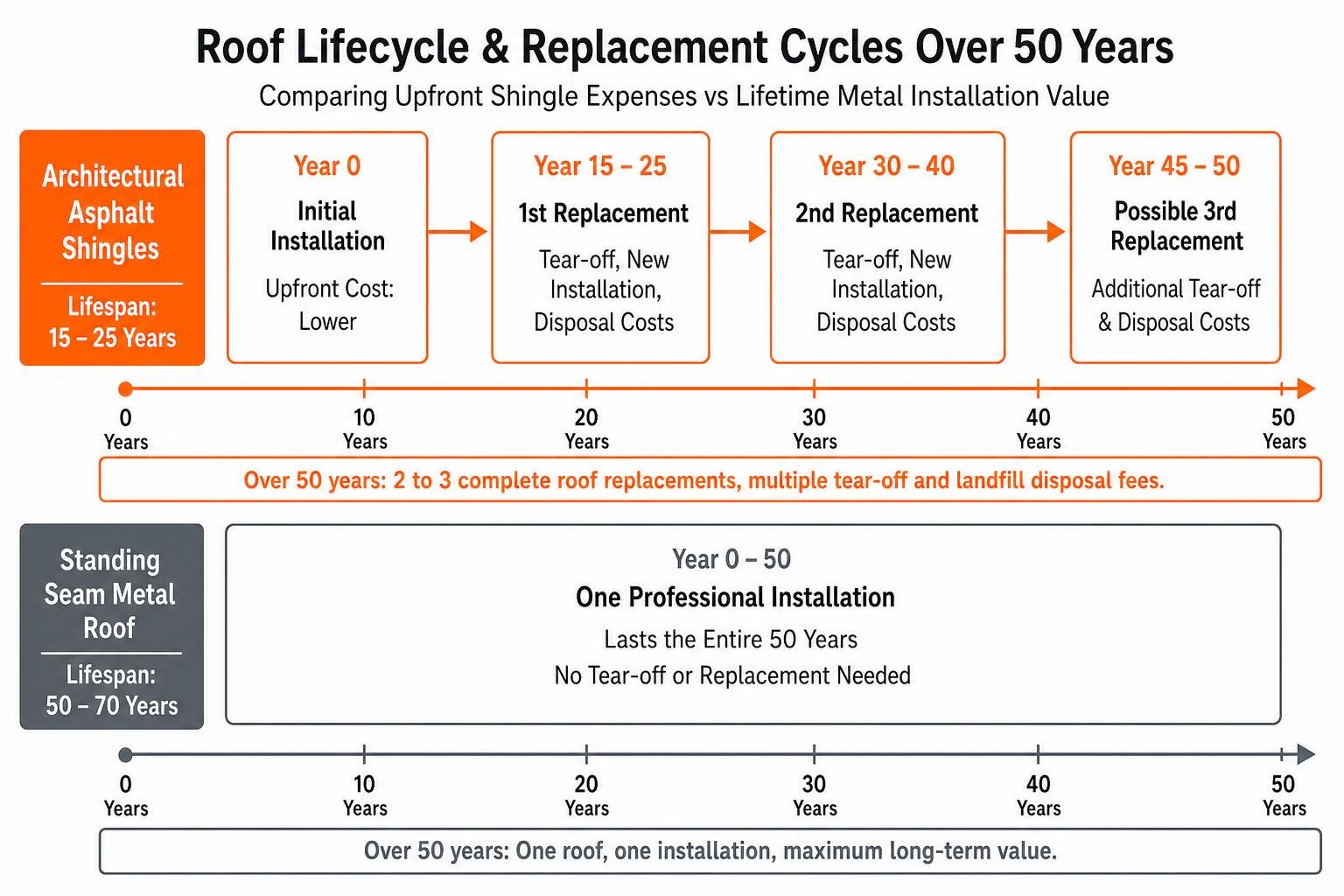
When reviewing initial bids, asphalt shingles clearly seem easier on the checkbook. Calculating what homeowners should pay per square for shingles shows lower initial out-of-pocket costs. However, evaluating an expected roof lifespan comparison reveals that traditional shingles usually require complete tear-off and replacement every 15 to 25 years in Midwest climates.
Over a 50-year timeframe, a homeowner with asphalt shingles will likely pay for two to three separate roof replacements, including multiple rounds of tear-off labor and landfill disposal fees. Conversely, a single, professionally installed standing seam metal roof will easily endure that entire half-century stretch.
| Financial Factor (50-Year Window) | Architectural Asphalt Shingles | Standing Seam Metal Roof |
|---|---|---|
| Initial Installation (2,000 sq. ft. roof) | $9,000 – $13,000 | $23,000 – $32,000 |
| Replacements Needed in 50 Years | 2 Full Replacements | 0 Replacements |
| Subsequent Replacement Costs (Adjusted) | $22,000 – $30,000 | $0 |
| Routine Maintenance & Storm Repairs | $3,500 – $6,000 | $500 – $1,500 |
| 50-Year Cumulative Cost | $34,500 – $49,000 | $23,500 – $33,500 |
| Estimated Resale ROI Recouped | ~50% – 55% | ~60% – 65% |
Beyond eliminating future tear-offs, metal roofs frequently qualify homeowners for policy discounts through insurance carriers due to their superior fire and hail impact ratings.
Making the Right Long-Term Roofing Choice for Your Home
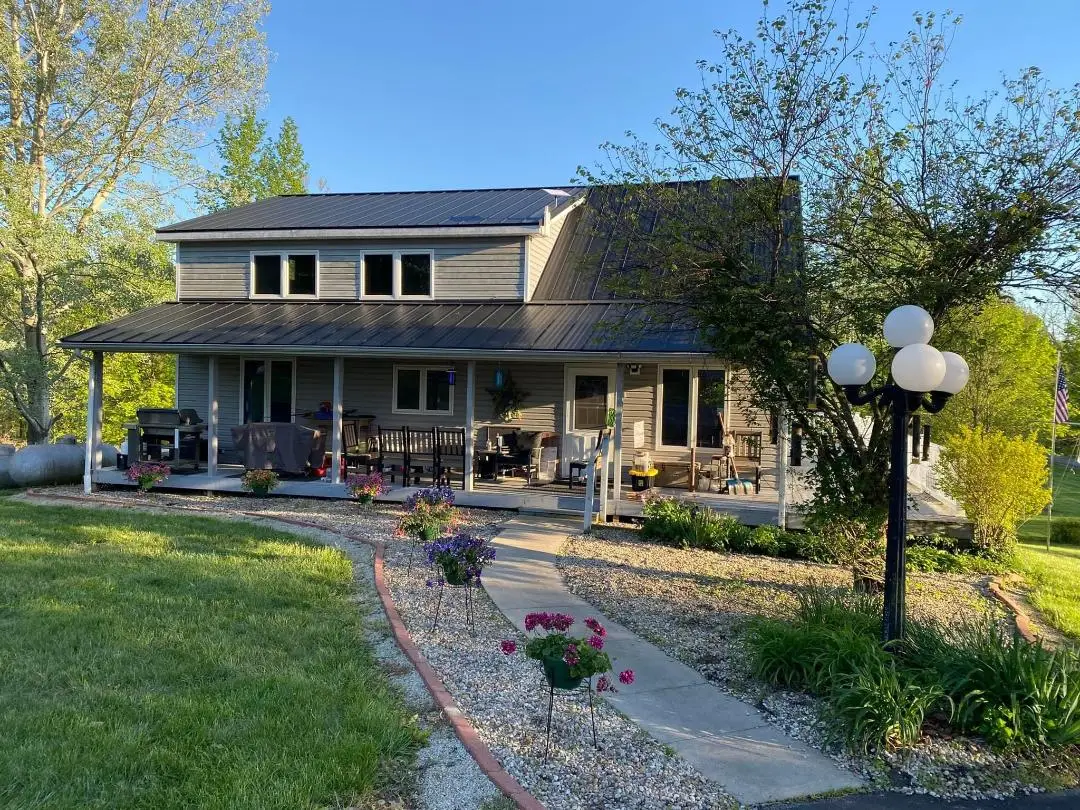
Choosing the optimal roof covering involves balancing budget parameters against long-term performance needs. Discovering the amazing benefits of metal roofing systems gives homeowners confidence when modernizing their building envelope.
Central Illinois weather regularly subjects residential structures to freezing winter snow loads, spring tornadoes with severe straight-line winds, and scorching summer sun. Metal roof systems excel across all these environmental extremes.
Energy Savings, Durability, and Weather Resistance
Metal roofing provides an immediate advantage in energy efficiency. Coated with specialized cool-roof pigment formulas such as Kynar 500, metal panels reflect high levels of solar radiation back into the atmosphere rather than absorbing heat into attic spaces. This solar reflectance can lower attic temperatures dramatically, reducing household cooling expenses by 10% to 25% annually.
From a structural standpoint, the standing seam durability against harsh weather remains unmatched:
- Wind Uplift: Interlocking concealed-clip systems withstand wind gusts up to 140 mph without lifting or tearing away.
- Impact and Hail Resistance: Class 4 impact-rated panels handle severe hail without puncturing, protecting the dry interior below.
- Fire Protection: Metal carries a non-combustible Class A fire rating, offering ultimate defense against stray embers.
- Sustainability: Metal panels are crafted from recycled content and remain 100% recyclable at the end of their operational life, creating eco-friendly and energy-efficient metal roofs that never crowd local landfills.
Selecting Certified Professional Roofers in Central Illinois
Because metal panels must accommodate natural thermal expansion and contraction cycles through precise fastening, proper installation quality makes all the difference. An amateur installation risks panel warping, oil-canning distortion, or leaky fastener penetrations.
Understanding proper maintenance and care for metal roofs ensures your investment retains its aesthetic luster and weatherproofing for decades.
At Mid-State Construction & Roofing, Inc., we provide both commercial and residential property owners across Beecher City, Effingham, Shelbyville, Altamont, Vandalia, Ramsey, Salem, Hillsboro, and Litchfield with superior roof replacement, installation, and maintenance. Based in Effingham, IL, our team brings industry-leading training, meticulous quality assurance, and on-site project supervision to eliminate installation failures and give you total peace of mind.
If you are ready to evaluate your home’s roofing options or want a detailed project estimate, explore our full suite of expert roofing services from Mid-State Construction & Roofing, Inc. and let our team protect your home for generations to come.