
DIY Metal Roof Rust Repair and Long-Term Protection
How to Repair Rust on a Metal Roof
For a small patch of surface rust, remove loose rust, clean and dry the metal, then apply a compatible rust-inhibiting primer and metal-roof topcoat. Fix any leaking screws or seams before coating. If the panel has holes, deep pitting, or feels weak, do not walk on it or paint over it. Have a roofer assess whether the panel needs replacement.
Rust starts when moisture reaches exposed steel, often at scratches, cut edges, fasteners, or worn coatings. Treating it early is simpler than repairing a leak after corrosion eats through a panel. This guide covers the repair steps, materials, and signs that a DIY fix is not enough.
I’m Virgil Strauch. My experience in operational leadership informs this practical approach to metal roof rust repair: check the damage, weigh the cost, and choose a fix you can maintain.
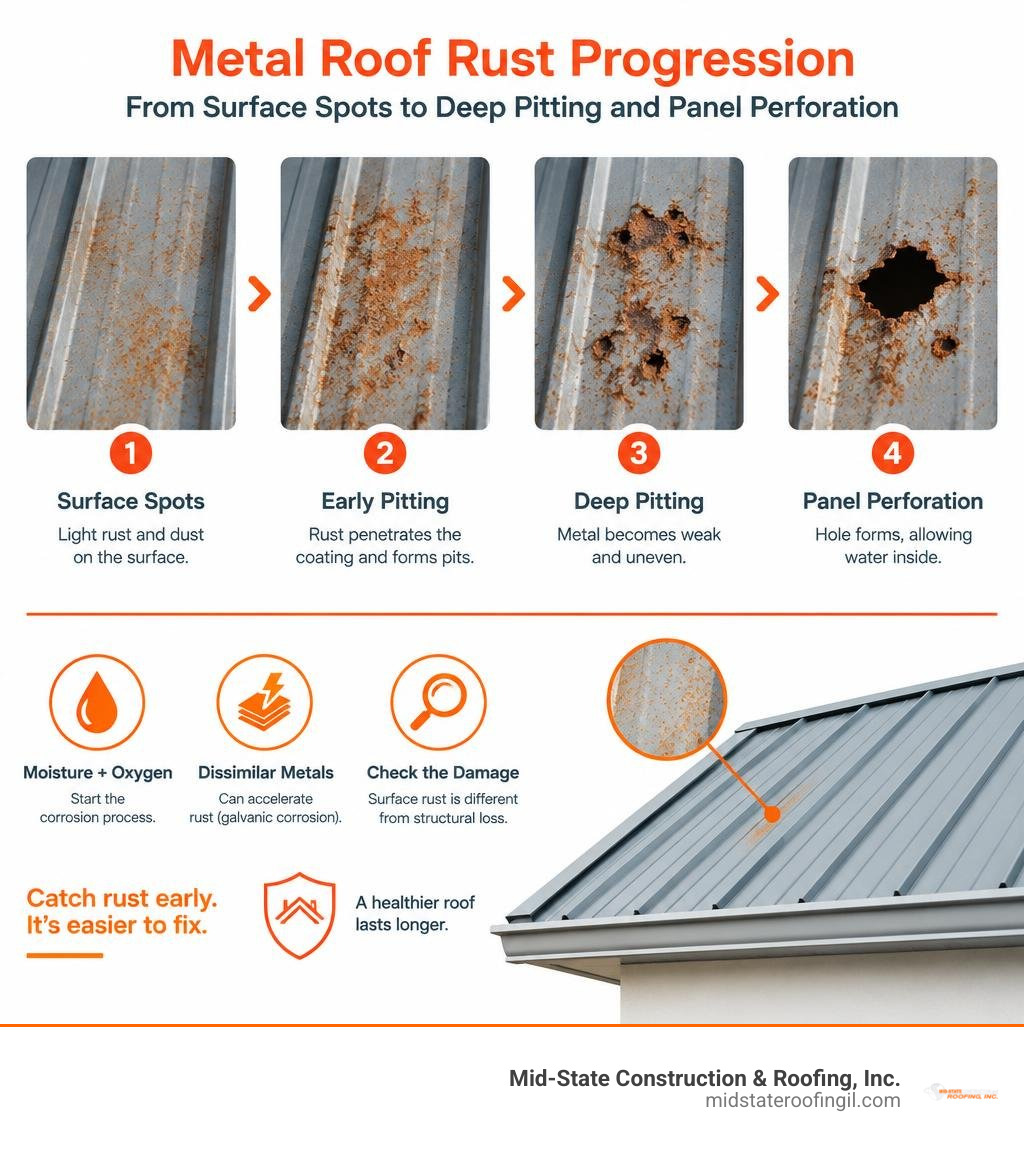
Oxygen and moisture continuously attack bare iron, triggering oxidation that flakes away protective factory finishes. When dissimilar metals come into direct contact—such as standard steel screws installed into aluminum or zinc-coated panels without isolation—galvanic corrosion rapidly accelerates panel decay.
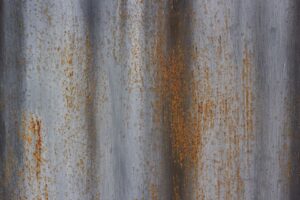
Differentiating surface oxidation from structural perforation is essential before starting any work. Surface rust appears as light orange-brown dust or mild flaking, leaving the underlying steel rigid and solid. Perform a gentle “poke test” using a flathead screwdriver against the discolored area; if the metal flexes deeply, crumbles, or punches through, the panel has lost structural integrity and cannot be salvaged with coatings alone.
Step-by-Step Guide to Metal Roof Rust Repair

Restoring an aging metal roof requires an engineered sequence of mechanical preparation, chemical conversion, and high-performance sealing, aligning with established metal roof restoration and coating field standards. Skipping surface preparation is the number one reason DIY coatings peel away within twelve months.
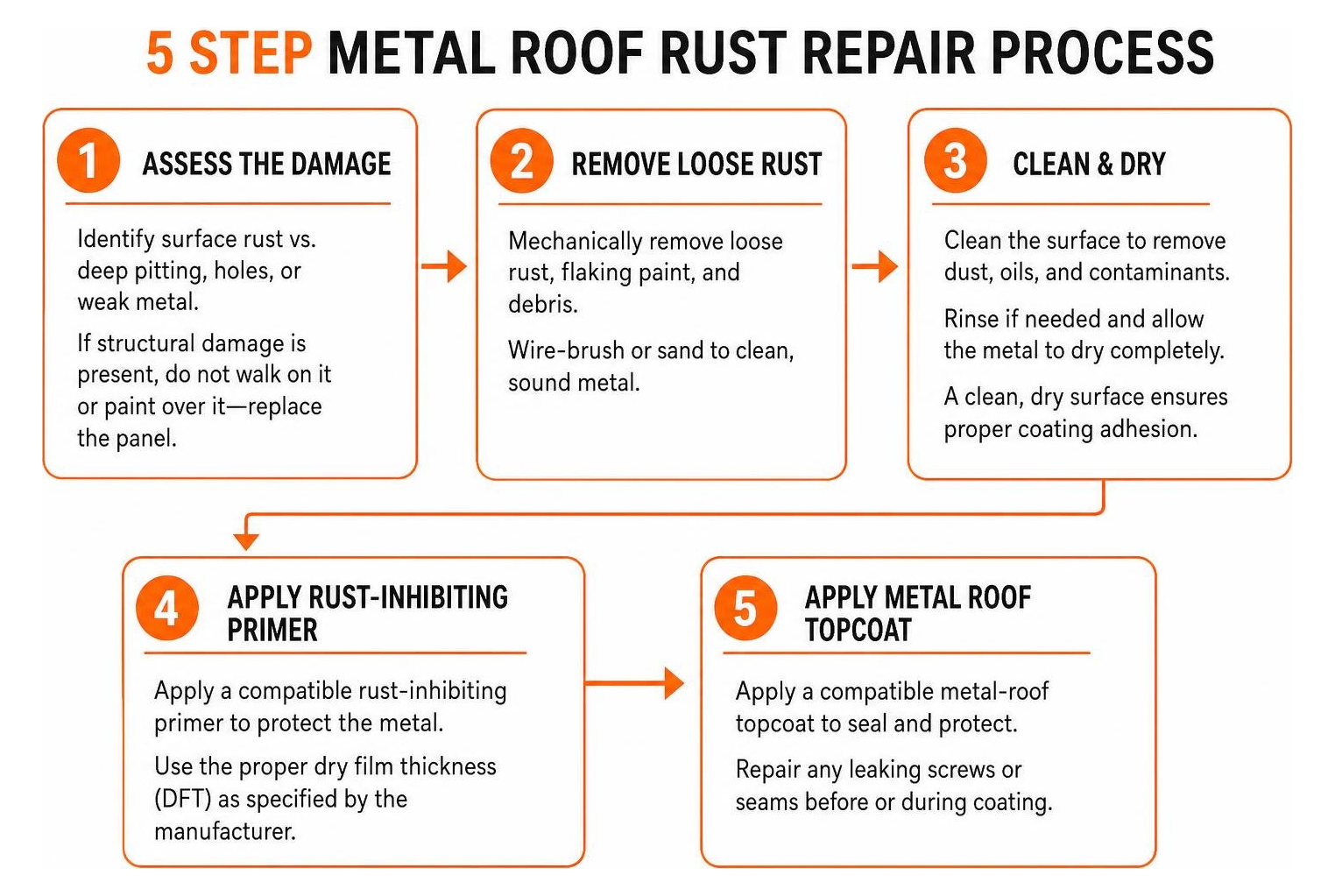
When selecting products, match the chemical properties of your primer and topcoat to ensure lasting adhesion and adequate dry film thickness (DFT).
| Material / Coating Type | Primary Function | Expected Lifespan | Best Use Case |
|---|---|---|---|
| Phosphoric Acid Converter | Neutralizes active iron oxide into iron phosphate | N/A (Base chemical) | Pitted areas after wire-brushing |
| Zinc-Rich Primer | Provides sacrificial cathodic protection | 10–15 years (as system) | Bare, cleaned steel panels |
| Metal-Grade Polyurethane | Flexible joint, screw head, and seam sealant | 8–12 years | Fastener heads, flashings, small pinholes |
| High-Solids Acrylic | UV-resistant, reflective topcoat | 7–10 years | Pitched roofs with positive drainage |
| Silicone Roof Coating | Seamless, ponding-water resistant barrier | 10–20 years | Low-slope panels and flat eave details |
Tools and Materials for Metal Roof Rust Repair
Executing a safe, durable repair requires commercial-grade equipment and specialized chemistries:
- Safety Equipment: Full-body OSHA-compliant safety harness, roof anchor, fall-arrest lanyard, safety glasses, and a chemical-rated respirator.
- Surface Prep Tools: Variable-speed angle grinder equipped with a braided wire cup wheel, stiff-bristled wire hand brushes, coarse sandpaper (80-grit), and a 3,000-PSI pressure washer.
- Application Tools: Heavy-duty drill/driver, magnetic hex head driver bits, paintbrushes, nap rollers (3/4-inch), and an airless sprayer for large sections.
- Chemicals & Sealants: Trisodium phosphate (TSP) cleaner, phosphoric-acid rust converter, zinc-rich rust-inhibitive primer, butyl tape, reinforcing polyester fabric, metal-grade polyurethane sealant, and elastomeric topcoats. For extensive property repairs, specialized acrylic metal coating systems deliver long-lasting protection across entire roof fields.
Surface Prep and the Zinc-Barrier Treatment Process
- Degreasing and Washing: Scrub all targeted areas using a TSP solution to break down environmental oils, pollen, and airborne grime. Pressure-wash the surface thoroughly and allow it to dry completely.
- Mechanical Scale Removal: Grind and wire-brush away loose rust scale until you reach bright, sound metal.
- Chemical Neutralization: Apply a phosphoric-acid converter to convert residual microscopic iron oxide into stable black iron phosphate. Allow 24 hours for curing.
- Cathodic Priming: Coat the prepared steel with a zinc-rich primer, maintaining a coverage rate of approximately 200 square feet per gallon. This primer acts as a sacrificial anode, corroding before the structural steel underneath can oxidize.
- Topcoat Application: Apply two coats of high-solids elastomeric or acrylic coating using a cross-hatching technique—rolling the first coat horizontally and the second vertically. Applying high-performance metal roof coating solutions seals out UV radiation and lowers roof surface temperatures dramatically.
Sealing Fasteners, Seams, and Rust Perforations

Exposed fasteners are the most common source of metal roof leaks. Over years of thermal cycling, original screws back out, and their factory rubber washers dry out, crack, and allow water to track down the shank.
- Fastener Replacement: Never simply retighten a backed-out fastener; doing so crushes degraded gaskets. Back out the old screw, inspect the underlying decking, and install a screw one size larger equipped with a fresh, UV-stable EPDM washer. Cap the screw head with a dollop of metal-grade polyurethane sealant. For persistent structural dripping, professional leaking fastener repair stops internal framing rot before decking degrades.
- Seam and Lap Sealing: Clean separated panel laps and sandwich UV-resistant butyl tape between the metal sheets. Fasten the joint using stitch screws to achieve uniform compression, embed reinforcing polyester fabric directly into a layer of flashing-grade sealant, and top-seal the joint.
- Patching Perforations: For isolated pinholes, clean the surrounding metal bare, cut a matching-gauge sheet metal patch that overlaps the hole by at least two inches in all directions, embed the patch in polyurethane sealant, and secure it with mechanical fasteners. Following proven protocols for repairing active metal roof leaks guarantees water cannot bypass your new patches.
Long-Term Maintenance, Costs, and Replacement Considerations
Daily thermal expansion and contraction continuously flex roof panels, testing seam elasticity and fastener seats. Consistent maintenance ensures that localized surface rust never develops into widespread structural decay.
| Project Scope | Typical Cost Range | Durability / Lifespan | Best Candidate Roofs |
|---|---|---|---|
| DIY Spot Repair | $50 – $150 total | 2 – 5 years | Isolated scratches, small surface rust patches |
| Targeted Pro Leak Repair | $400 – $1,000 per source | 5 – 10 years | Backed-out screws, isolated flashing leaks |
| Full Restorative Coating | $3 – $7 per sq. ft. | 10 – 20 years | Widespread surface oxidation, sound panels |
| Full Roof Replacement | $15 – $20 per sq. ft. | 40 – 70 years | Rusted-through panels, severe structural thinning |
Long-Term Maintenance and Cost of Metal Roof Rust Repair
When executed with the proper Zinc-Barrier methodology, a high-quality rust restoration reliably lasts between 10 and 15 years before requiring a maintenance refresh.
Following a schedule of preventative metal roof care helps homeowners catch fastener movement early. Plan to inspect exposed fasteners every 2 to 3 years, expecting targeted or full screw replacements between 7 and 15 years of roof life. Properties located in humid agricultural valleys or exposed industrial areas benefit from a professional inspection every 2 to 3 years, while typical inland roofs can go 4 to 5 years between professional evaluations.
Reflective white restorative coatings bounce 80 to 90 percent of solar energy away from the building. While an untreated dark metal roof can spike 50 to 90 degrees Fahrenheit above ambient air temperatures on a clear summer afternoon, a high-SRI (Solar Reflectance Index) reflective coating drops building cooling loads and keeps attics noticeably cooler.
Knowing When Roof Replacement Outweighs Restoration
Restoration coatings add years of dependable service to structurally sound roofs, but they cannot restore lost steel gauge or fix deteriorated panel integrity. If more than 20 percent of your total roof surface has rusted through, if panels exhibit deep pitting that catches a screwdriver blade, or if panels spin fasteners without gripping framing underneath, coating over the problem is unsafe.
When rust compromises the underlying structural deck or spreads across all standing seams, investing in metal roof replacement options is the safest, most cost-effective path forward.
At Mid-State Construction & Roofing, Inc., we serve property owners across Central Illinois—including Effingham, Altamont, Beecher City, Vandalia, Ramsey, Shelbyville, Salem, Hillsboro, and Litchfield. Our factory-certified teams bring industry-leading quality assurance, hands-on project supervision, and premium materials to every residential and commercial roofing project.
If you are unsure whether your rusting panels qualify for a high-performance restoration coating or need section replacements, connect with our team for an expert metal roofing consultation. We will inspect your roof structure, trace every leak source, and deliver an honest, lasting solution for your property.