
Everything You Must Know About Standing Seam Metal Durability
Is Standing Seam Metal Roofing Worth It?
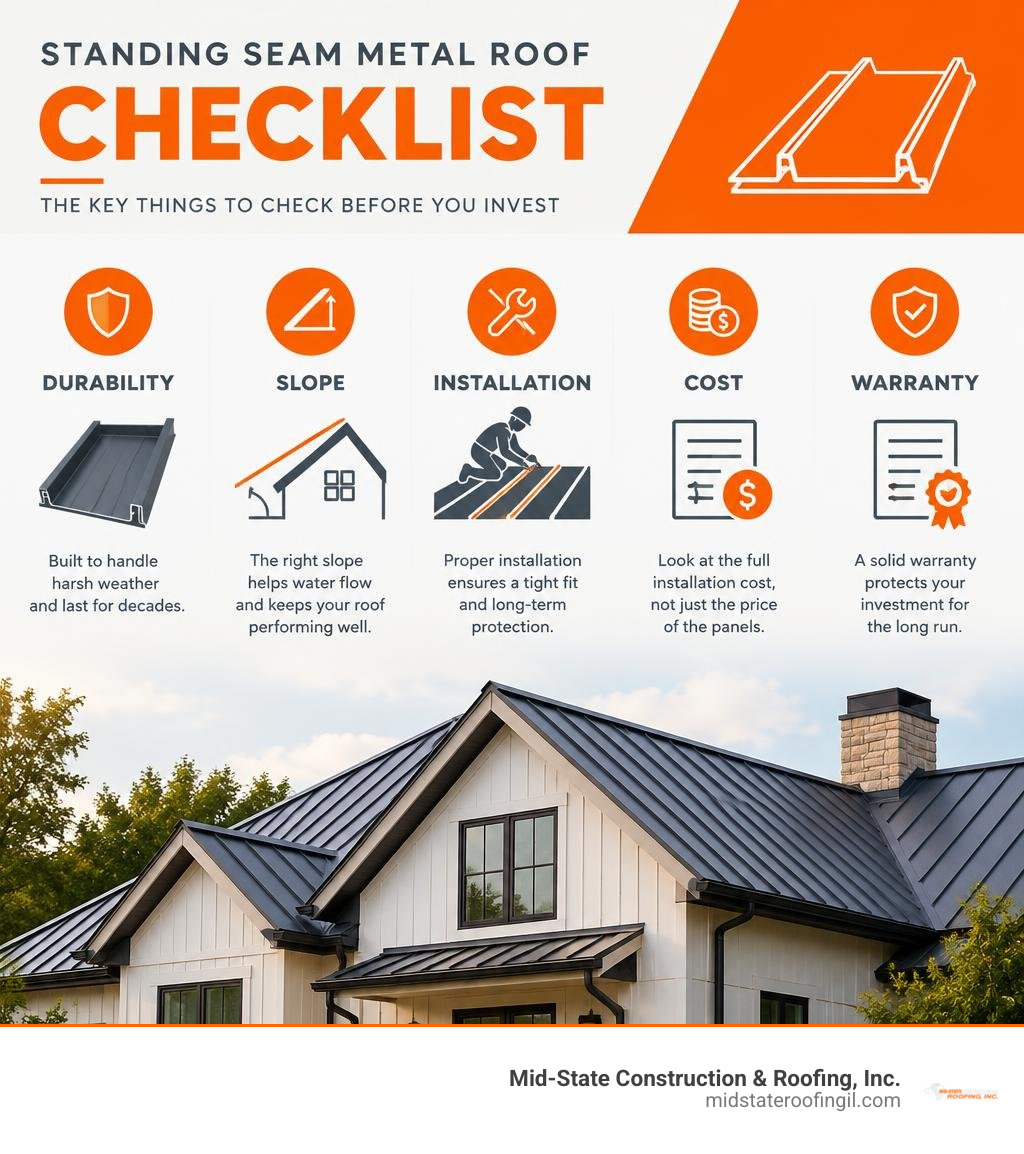
Standing seam metal roofing is a durable choice if your budget allows for a higher upfront cost. Its raised seams join panels above the roof surface, while concealed fasteners reduce the exposed screw holes found on some other metal roofs. A well-installed system can last for decades, but its value depends on the right panel, roof slope, and installation details.
For a home or small business in central Illinois, ask how the roof will handle wind, temperature changes, and water at valleys and roof openings. Compare the full installation cost and warranty, not just the price of the panels.
I’m Virgil Strauch, and my background in business leadership and long-term planning shapes how I assess standing seam metal costs and value. This guide focuses on the details worth checking before you invest in a new roof.
Basic standing seam metal glossary:
Understanding Standing Seam Metal Roofing Systems and Profiles
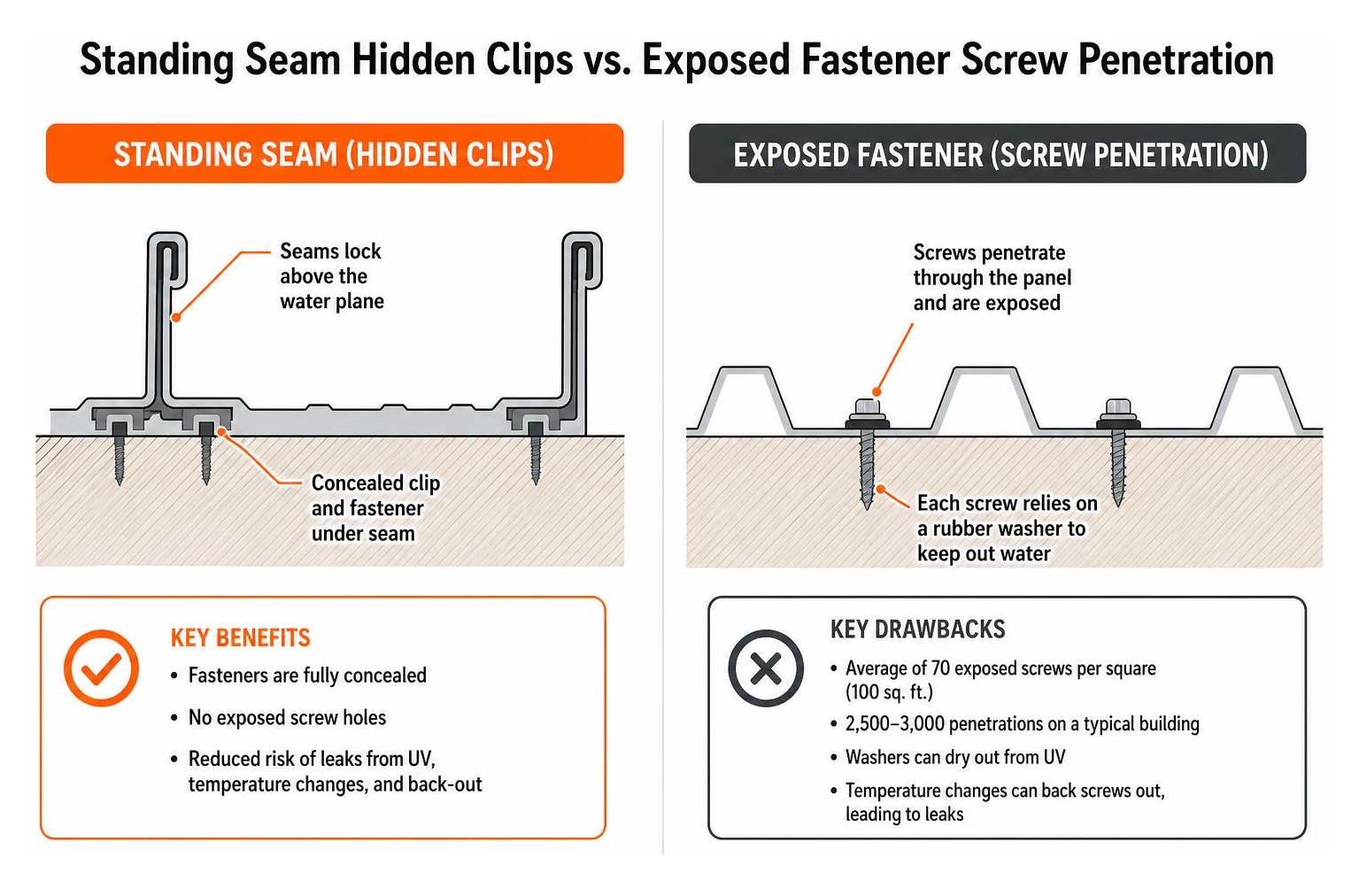
When you compare roofing systems, the difference between exposed fastener panels and standing seam metal is night and day. Standard screw-down metal roofing (like corrugated or agricultural panels) requires an average of 70 exposed screws per roofing square (100 square feet). On a typical building, that means 2,500 to 3,000 penetrations driven straight through the metal surface, each relying on a small rubber washer to hold back rain, snow, and ice. Over time, UV rays dry out those washers, and seasonal temperature swings cause the metal to back the screws out, leading to leaks.
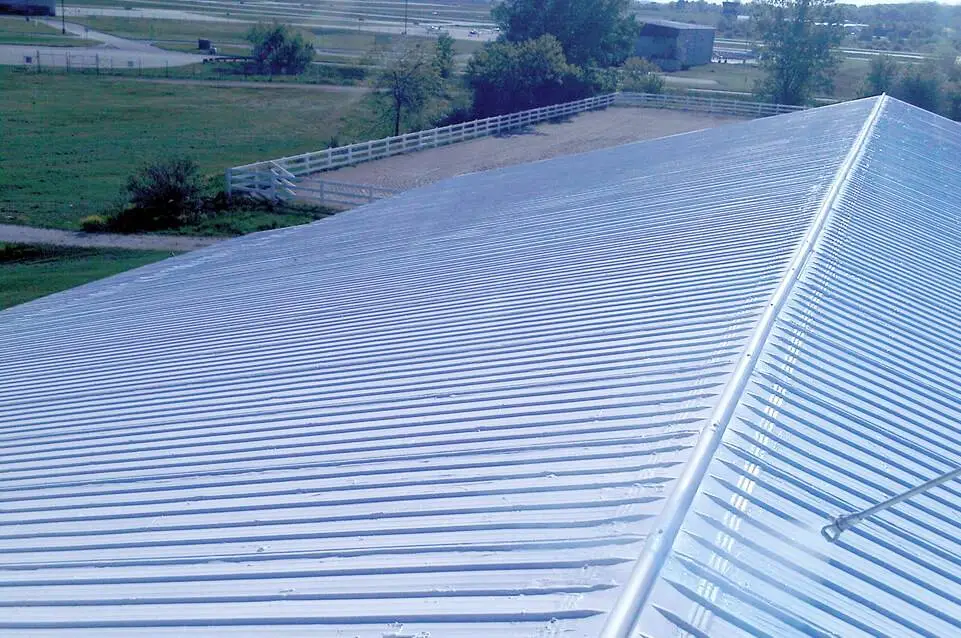
Standing seam systems solve this vulnerability completely. The vertical legs (or ribs) rise anywhere from 1 inch to 2 inches above the flat panel pan, locking adjoining panels together above the water plane. Even better, every clip and fastener remains fully concealed beneath the interlocking seams.
When choosing the right metal roof for your property, understanding the differences between system types ensures you invest in lasting protection:
| Feature | Snap-Lock Standing Seam | Mechanical Lock Standing Seam | Exposed Fastener Panels |
|---|---|---|---|
| Fastener Style | Concealed clips / fastener flange | Concealed fixed or floating clips | Exposed through-fastened screws |
| Fastener Penetrations | Zero surface penetrations | Zero surface penetrations | ~70 penetrations per 100 sq ft |
| Minimum Roof Slope | 3:12 (solid deck) or 1:12 (specialty profiles) | 1/2:12 (low slope capable) | 3:12 |
| Seam Method | Snaps together with downward pressure | Field-seamed mechanically (90° or 180°) | Overlapped laps screwed down |
| Thermal Movement | Handled via expansion clips / slots | Excellent movement via sliding clips | Highly restricted; stresses screws |
| Average Lifespan | 40 to 70+ years | 50 to 100 years | 15 to 25 years |
Core Profiles: Snap-Lock vs. Mechanically Seamed Panels
Standing seam panels fall into two primary mechanical categories:
Snap-Lock Profiles: Profiles like the ASL-100 (which features a 1-inch seam height in widths of 13, 17, and 21 inches) or Snap Seam Metal Roofing utilize roll-formed male and female legs that snap together securely under firm pressure. These systems eliminate the need for hand or electric seaming tools on the roof, making installation swift and efficient. They perform exceptionally well on steep-slope architectural roofs (typically 3:12 pitch or steeper). Some snap-on panels can also be curved for barrel vaults and architectural canopies with radiuses down to 9 feet.
Mechanically Seamed Profiles: For lower slopes, high-wind zones, or extreme weather environments, panels are joined using specialized roll-forming techniques. As detailed in guides on sheet metal joints and seams, these panels are folded together in the field. A single lock (90-degree fold) provides exceptional hold, while a double lock (180-degree fold)—such as the DL20 Double-Lock panel or the ML-150 Mechanical Lock—turns the joint twice over concealed clips with factory-applied non-curing sealant. This allows roofs to be installed safely on pitches down to 1/2:12 while maintaining absolute watertightness.

Material Selections: Steel, Aluminum, Copper, and Zinc
Selecting the right metal substrate dictates your roof’s resistance to corrosion, its structural strength, and its long-term aesthetic. We carefully evaluate the pros and cons of standing seam systems across four primary metals:
- Galvalume® and Galvanized Steel: The most popular choice for commercial and residential roofing. Steel coated in an aluminum-zinc alloy (Galvalume) delivers high tensile strength and rust resistance. While standard 26-gauge steel weighs roughly 0.94 to 1.06 pounds per square foot, heavy-duty 24-gauge or 22-gauge steel provides superior resistance against oil canning and structural loads. A steel roof with an aluminum-zinc alloy coating can easily last up to 100 years.
- Aluminum: Lightweight (.032″ to .040″ thickness) and naturally immune to red rust, aluminum is the premier choice for humid or coastal environments.
- Architectural Zinc: Premium zinc panels develop a natural protective patina over time. High-performance zinc systems (such as VMZINC) feature center-to-center seam spacings of 416 mm to 430 mm and panel lengths up to 6,000 mm, offering unmatched architectural elegance.
- Copper: The ultimate lifetime metal. Copper requires no paint, naturally oxidizes into a rich verdigris hue, and lasts for over a century without deteriorating.
Engineered Durability, Weather Resistance, and Thermal Movement
A properly engineered standing seam roof provides robust protection against the harshest weather. High-grade mechanical lock panels are tested to withstand the rigorous standards of UL 580 Class 90 uplift resistance and UL 2218 Class 4 impact resistance (the highest rating against hail damage). Furthermore, metal provides non-combustible Class A fire resistance, helping safeguard structures against blowing embers during wildfire hazards.
Choosing high-reflectance standing seam panels is also a cornerstone of energy-efficient and eco-friendly roofing. Energy Star® rated finishes reflect between 25% and 67% of solar heat, lowering attic temperatures and cutting building cooling loads significantly during hot midwestern summers.
Thermal Movement and Clip Systems in Standing Seam Metal Construction
Metal naturally expands as it heats up in the sun and contracts as it cools down at night. If long panels are screwed firmly in place, this expansion creates tremendous internal stress, causing panels to warp, bow (known in the industry as oil canning), or pull out their fasteners.
Standing seam systems solve thermal movement using engineered clips:
- Fixed Clips: Used on shorter panel runs or near the ridge to anchor the roof at a fixed datum point.
- Sliding/Floating Expansion Clips: Designed with a two-piece base and tab mechanism (such as clips with a 70 mm sliding slot) that allows the metal panels to glide smoothly back and forth over the deck as temperatures rise and fall.
These clips provide tremendous structural hold—often exceeding 50 daN pull-out strength per clip—while giving the metal the freedom to breathe without placing any strain on the watertight seams.
Long-Term Longevity and Protection of Standing Seam Metal Finishes
The secret behind the striking appearance and longevity of modern standing seam roofs lies in advanced PVDF (polyvinylidene fluoride) resin coatings, widely known under trade names like Kynar 500® or Hylar 5000®.
Unlike cheap polyester paints that fade and oxidize after a single decade, factory-applied PVDF coatings are warranted for 35 to 40 years against chalking, fading, and peeling. Coupled with a 25-year Galvalume substrate warranty, a high-performance standing seam roof easily delivers 50 or more years of low-maintenance service.
Lifecycle Cost, Installation Standards, and Long-Term Value
While the upfront investment for a standing seam roof is higher than asphalt shingles or exposed-fastener tin, understanding Illinois metal roofing costs across the entire building lifecycle reveals its true economic value.
Because properly installed standing seam roofs last two to three times longer than screw-down metal and up to four times longer than builder-grade asphalt shingles, your cost-per-year drops dramatically over a 30- to 60-year horizon.
Critical Substrate, Slope, and Flashing Requirements
Even the highest-grade metal will fail if the deck preparation and flashing details are compromised. Professional installation requires precise execution of building science fundamentals:
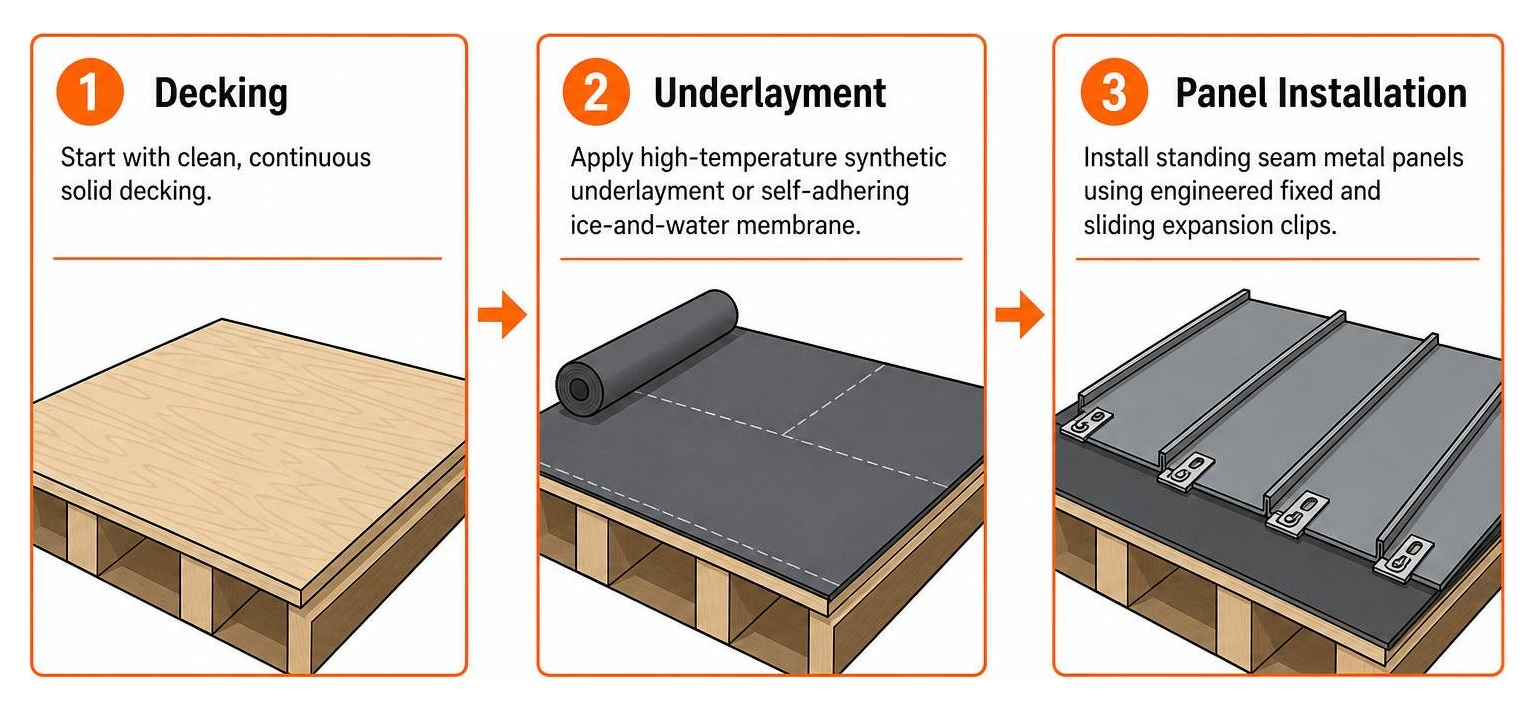
- Substrate Preparation: Panels should be installed over clean, continuous solid decking (such as 5/8″ plywood or OSB) covered with a high-temperature synthetic underlayment or self-adhering ice-and-water membrane.
- Slope Verification: Snap-lock panels require a minimum slope of 3:12 (or 1:12 on specific engineered snap profiles), while double-lock mechanical systems can be installed down to 1/2:12.
- Flashing & Closures: Valleys, eaves, rakes, sidewalls, and penetrations must be flashed using hemmed metal edges, Z-closures, and butyl sealants rather than exposed surface caulking. Mastering these details is essential for preventing and repairing metal roof leaks.
Lifecycle Value and Maintenance Considerations
Once installed, standing seam roofs require remarkably little maintenance. Furthermore, because the vertical seams create raised ribs, equipment like solar arrays, snow guards, and satellite mounts can be clamped directly to the standing seams using non-penetrating aluminum clamps—preserving the watertight integrity of the roof deck beneath.
At Mid-State Construction & Roofing, Inc., we know that a roof is only as good as the crew installing it. Our industry-leading training, rigorous quality assurance, and dedicated on-site project supervision ensure every clip, seam, and flashing detail is executed to the highest industry standards.
Whether you need commercial retrofit solutions or residential metal roof replacement services, our team delivers durable, high-performance protection across Effingham, Altamont, Beecher City, Shelbyville, Vandalia, Ramsey, Salem, Hillsboro, and Litchfield.
Ready to invest in lifetime durability? Contact us today to explore expert metal roofing in Altamont and secure an estimate tailored to your building’s unique architecture.