
How to Find Urgent Roof Repair Options Fast
How to Find Urgent Roof Repair When a Leak Starts
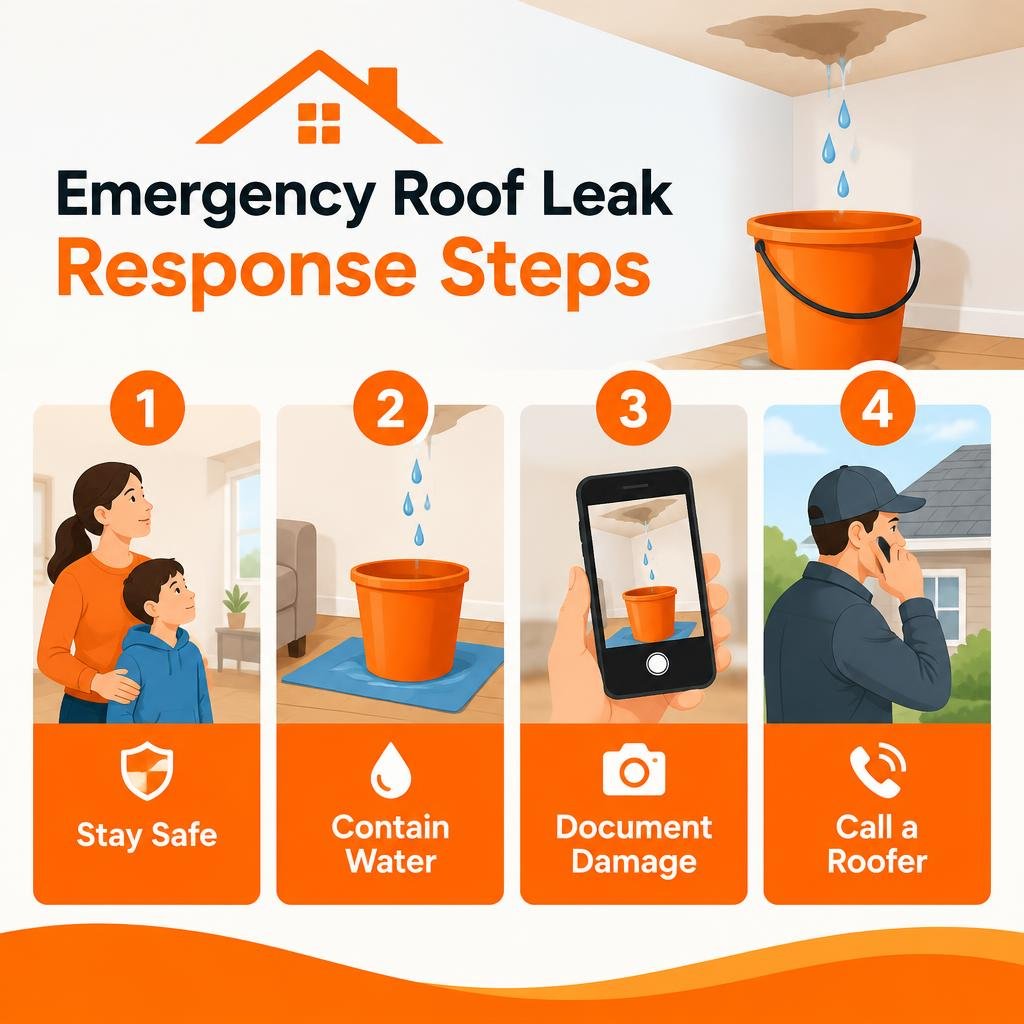
If your roof is leaking, protect people and limit water damage first. Move valuables away from the drip, place a bucket beneath it, and avoid any area near wet wiring or a sagging ceiling. Take photos from a safe spot, then call a local roofer who can inspect the damage and provide temporary weather protection. Do not climb onto a wet or storm-damaged roof.
I’m Virgil Strauch, a business leader based in Beecher City, Illinois, with experience planning work and making decisions under pressure. I bring that practical approach to roof repair guidance, starting with the steps that matter most when time is short.
Easy roof repair glossary:
Emergency Roof Repair and Immediate Action Steps
When an unexpected storm strikes Central Illinois, urgent action keeps water from ruining your home’s framing, drywall, and insulation. The primary goal of emergency service is hazard mitigation and water diversion until permanent structural repairs can take place.
Immediate Steps When Discovering a Roof Leak
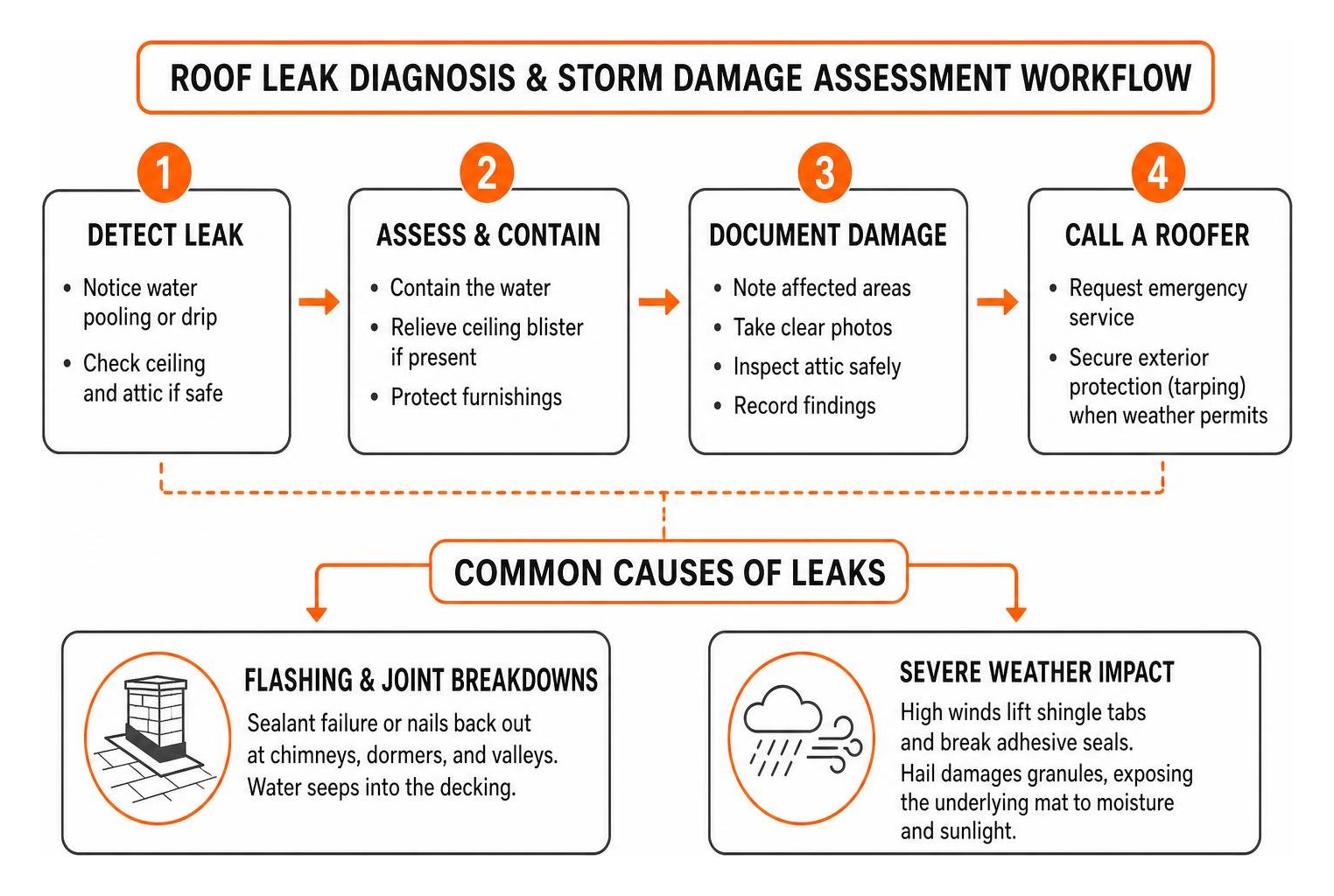
Discovering water pooling overhead creates instant stress, but taking orderly steps prevents chaos:
- Contain the Water: Position a sturdy bucket or plastic bin beneath the active drip. Line the bottom with a towel to reduce splashing and noise.
- Relieve Water Pressure: If you notice a swollen, sagging blister on your ceiling drywall, use a small screwdriver or nail to puncture the center of the bulge. This drains trapped water directly into your container and prevents the entire drywall panel from collapsing under excess weight.
- Protect Furnishings: Move furniture away or drape plastic sheeting over items that cannot be relocated.
- Inspect the Attic Carefully: If it is safe to enter your attic, use a bright flashlight to inspect rafters. Water often travels along roof decking before dripping through your ceiling. Never step off the reinforced ceiling joists.
- Secure Exterior Protection: When weather permits and professional crews arrive, heavy-duty tarping can be applied to divert rain away from exposed sheathing.
Learning smart ways to diagnose and fix a leaky ceiling gives you the confidence to protect your living space until professional crews arrive. Adhering strictly to established emergency roof repair procedures ensures your household remains safe during severe weather events.
Identifying Storm Damage and Common Causes of Leaks
Roof leaks originate from multiple vulnerabilities across your roofing system. Notably, 60% to 70% of roof leakage problems stem from incorrect application or poor initial installation rather than purely aged materials.
Common causes of leaks include:
- Flashing and Joint Breakdowns: Thin sheet metal flashings protect vulnerable joints around chimneys, dormers, and valleys. When sealant fails or nails back out, water seeps directly into the decking.
- Severe Weather Impact: High-speed wind gusts create localized wind uplift, lifting shingle tabs and breaking their adhesive seals. Hailstones shatter the protective mineral granules on asphalt shingles, exposing the underlying fiberglass mat to moisture and sunlight.
- Pipe Penetrations: Rubber pipe boots around plumbing vents dry out, crack, and pull away from vent pipes over time, allowing water to trickle down interior walls.
Understanding the primary causes of residential roofing damage helps you spot trouble areas early. When severe storms pass through towns like Effingham, Altamont, or Vandalia, dealing with roofing damage after a storm requires a prompt inspection to document lifted shingles or dented vents for insurance claims. Homeowners curious about basic shingle mechanics can explore How to Repair an Asphalt Shingle Roof to better understand how wind and temperature shifts affect composition shingles.
Evaluating Urgent Roof Repair vs. Full Replacement
A critical question after storm damage is whether to fix isolated sections or replace the entire system. Consider the following factors:
- Roof Age: The average roof lasts between 15 and 30 years, whereas most residential structures stand for 50 to 100 years. If your asphalt roof is over 20 years old and showing widespread wear, investing in extensive patching may offer diminishing returns.
- Scope of Damage: If damage is isolated to a few missing shingles or a damaged pipe boot, a spot repair is cost-effective. However, widespread granule loss, pervasive wood rot, or structural sagging demands a full tear-off.
- Fastener Failure (Nail Sickness): On older slate or tile roofs, corroded nail heads can cause individual tiles to slip down the roof pitch, signaling that the underlying fastening network has failed.
Watching for clear warning signs of roofing failure helps prevent structural damage to rafters and ceilings. When deciding between a targeted patch or a new installation, evaluating roof repair versus replacement ensures your investment matches your home’s long-term needs.
Long-Term Solutions: Costs, Systems, and Professional Hiring
After handling an urgent leak, transitioning to durable, long-term solutions protects your property’s value, ensures building code compliance, and preserves warranty coverage.
Average Roof Repair Costs and Municipal Permit Guidelines
Roof repair costs vary depending on the extent of damage, the pitch of the roof, and the materials required. Addressing a minor leak promptly saves money by preventing widespread structural rot.
| Repair Category | Typical Damage Scope | Estimated Cost Range | Key Factors |
|---|---|---|---|
| Minor Repair | Replacing broken shingles, resealing pipe boots, small flashing patch | $150 – $400 | Localized labor, minimal materials |
| Moderate Repair | Valley repair, multiple damaged decking sheets, chimney re-flashing | $600 – $1,800 | Extensive labor, tear-off of small sections |
| Major Structural | Truss reinforcement, extensive rot remediation, large-scale storm damage | $3,500 – $12,000+ | Structural carpentry, interior drywall repairs |
| Full Replacement | Complete tear-off and re-decking across entire roof surface | $6,000 – $20,000+ | Material choice, square footage, warranties |
In Illinois municipalities such as Shelbyville, Hillsboro, Salem, and Litchfield, routine maintenance and minor like-for-like repairs generally do not require extensive building permits. However, if your repair involves structural timber alterations, slope changes, or complete re-roofing, local building departments require permits and post-installation inspections. Exploring cost-effective repair solutions helps you plan your budget while keeping your roof sound.
Selecting the Right Repair Materials and Membrane Systems
Matching your repair method to your specific roof style ensures a watertight seal that holds up against midwestern temperature swings:
| Roofing System | Primary Application | Key Advantages for Repairs |
|---|---|---|
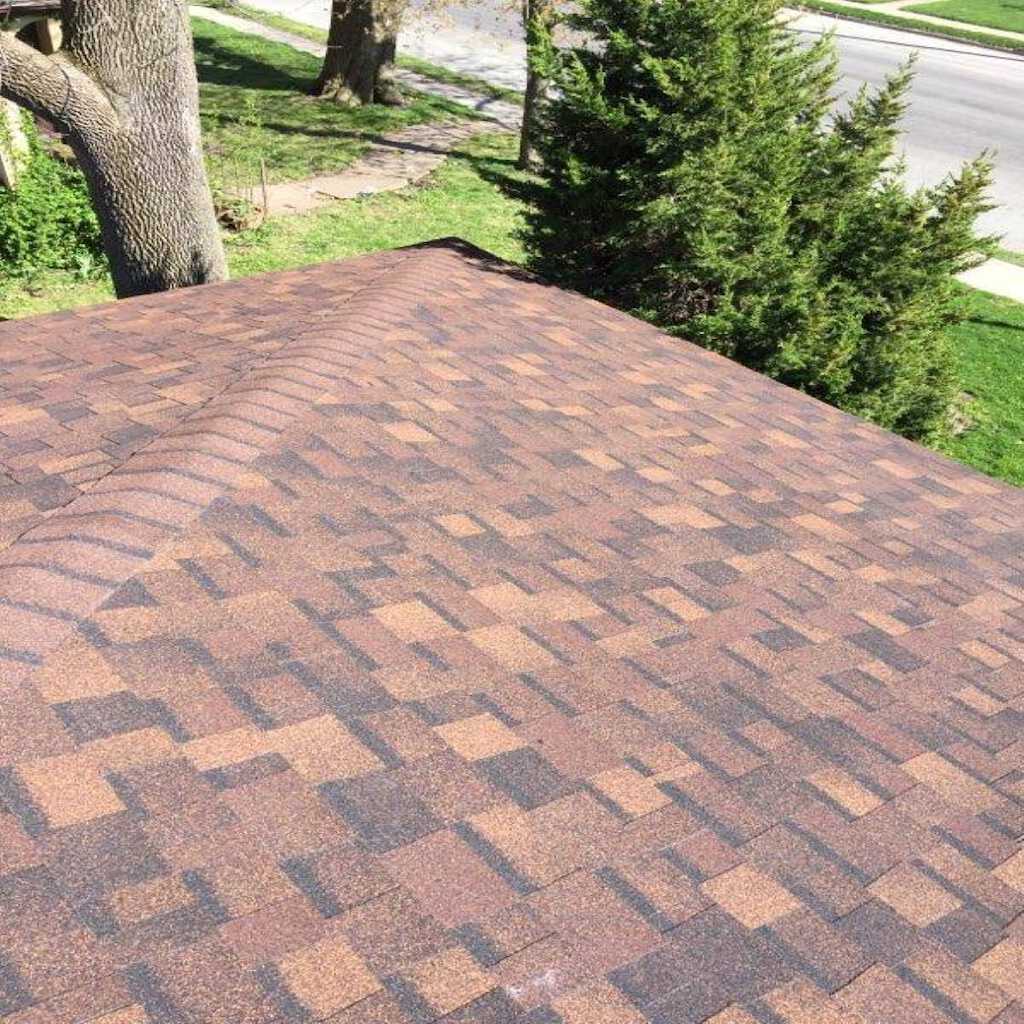
| Asphalt Shingles | Steep-slope residential homes | Cost-effective, easy to match colors, fast spot replacement |
| Single-Ply (TPO/EPDM/PVC) | Commercial and residential flat roofs | UV resistance, heat-welded seams, lightweight |
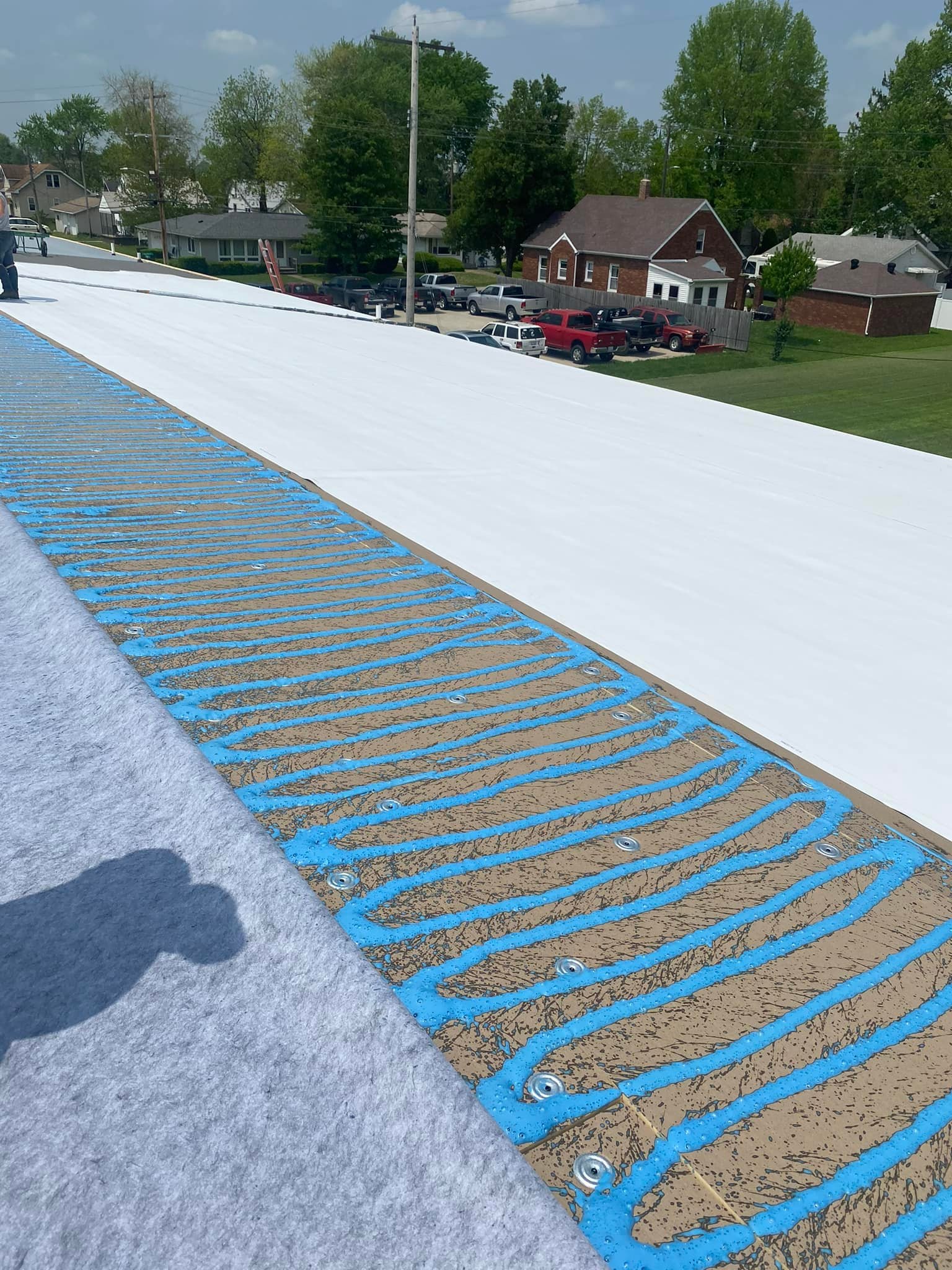
| Liquid-Applied Membranes | Flat roofs, complex penetrations, schools/hospitals | Low-odor, seamless waterproofing, no open flames needed |
| Standing Seam Metal | Residential and commercial architectural roofs | Exceptional longevity, high wind uplift resistance |
For commercial low-slope buildings and flat residential additions, evaluating single-ply membrane roofing options provides insight into durable thermoplastic and synthetic rubber systems. Liquid-applied elastomeric coatings deliver an excellent solution for facilities that must remain fully operational without open-flame installation hazards. Maintaining these systems through routine preventive roof maintenance prevents membrane cracking and keeps drainage clear season after season.
How to Vet and Choose a Qualified Roofing Contractor
Hiring the right team ensures your repairs hold up against severe weather. To choose a reputable contractor, evaluate these core standards:
- Licensing and Insurance: Verify that the company holds active state licensing and comprehensive general liability and workers’ compensation coverage.
- Manufacturer Certifications: Certified installers receive specialized training on manufacturer specifications, which protects your extended material warranties.
- On-Site Supervision: Inquire about project supervision to ensure every detail, from underlayment installation to flashing seals, meets strict quality standards.
- Local Physical Presence: Work with established teams rooted in your local community rather than out-of-state storm chasers.
Reviewing a clear guide on how to choose a roofing company gives you the criteria needed to compare local estimates. Preparing essential questions to ask a contractor—such as emergency response times and workmanship guarantees—ensures your property receives the care it deserves.
At Mid-State Construction & Roofing, Inc., we provide commercial and residential roofing services throughout Effingham, Beecher City, Ramsey, and surrounding communities. Our industry-leading training, quality assurance, and dedicated project supervision ensure your roof is repaired right the first time. Contact us today for thorough inspections, urgent repairs, and dependable long-term protection.