
A Practical Guide to Repairing Leaking Cement Roofing Sheets
Stop Cement Sheet Roof Leaks Before They Spread
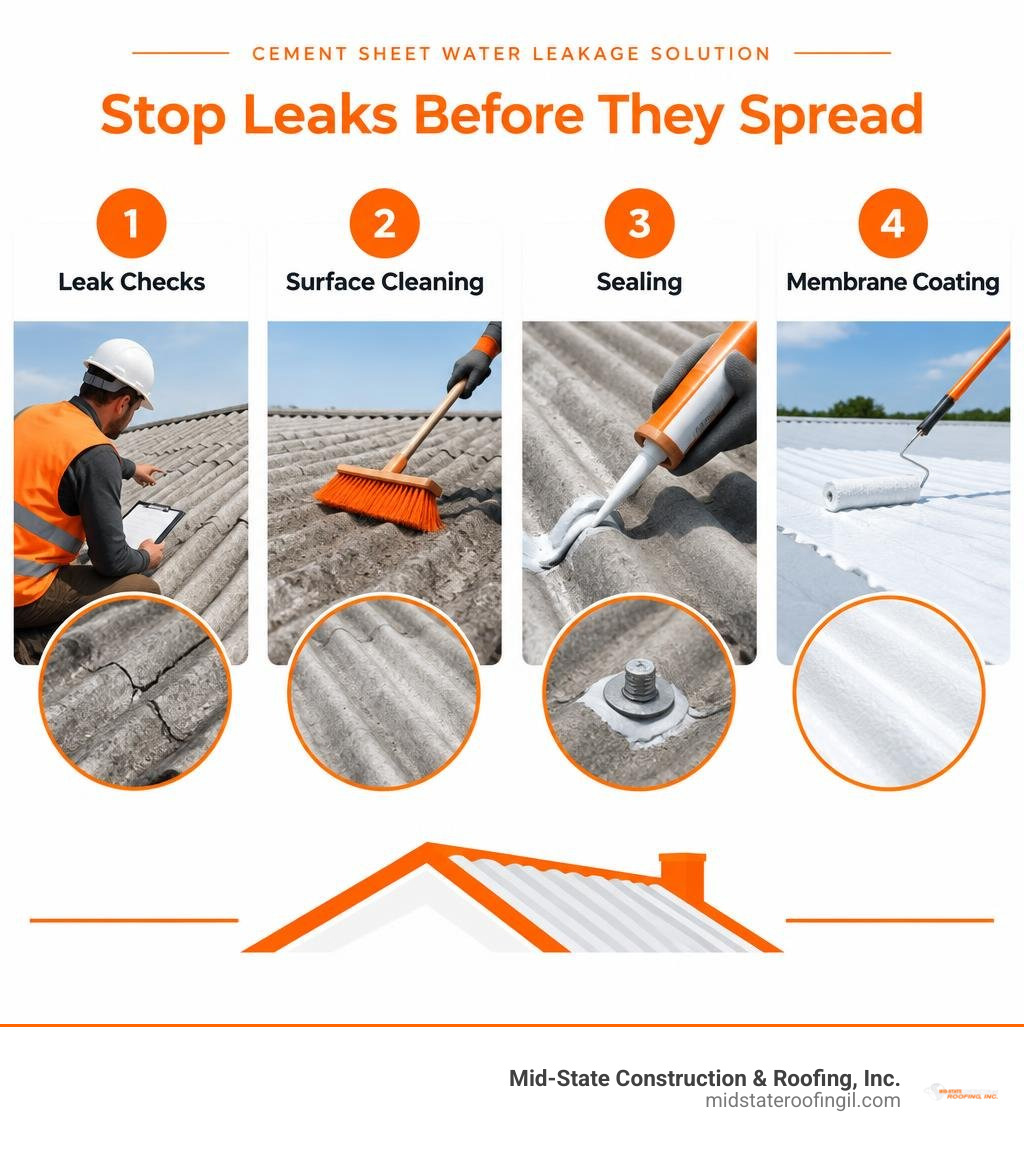
A reliable cement sheet water leakage solution starts with finding the entry point, cleaning and drying the area, then sealing cracks, fasteners, overlaps, or ridge caps with the right flexible material. For a small, localized leak, use a compatible neutral-cure silicone or polyurethane sealant. For failed overlaps, aluminum-backed butyl tape can provide a quick temporary seal. When leaks, cracks, or weathering affect a wider area, a reinforced elastomeric liquid membrane is usually the longer-lasting repair.
Water rarely drips straight down from the hole in the roof. Check for ceiling stains, damp framing, loose bolts, cracked sheets, worn washers, and open lap joints uphill from the visible water damage. Repairing a leak early helps limit rot, mold, insulation damage, and more expensive structural repairs.
I am Virgil Strauch, a business leader with practical experience in planning and managing complex property-maintenance initiatives. In this guide, I will break down the cement sheet water leakage solution process into clear decisions that help property owners choose durable repairs and know when to call a roofing professional.
Common Causes of Cement Sheet Roof Leaks

About 80% of property owners encounter some form of roof leakage over their building’s lifespan, and corrugated cement sheets are frequently among the most vulnerable assemblies. While fiber cement panels offer great fire resistance and rigid structural qualities, their low elasticity makes them susceptible to moisture retention and structural fatigue. Understanding why these systems leak is the first step toward choosing an effective commercial roofing or industrial maintenance strategy.
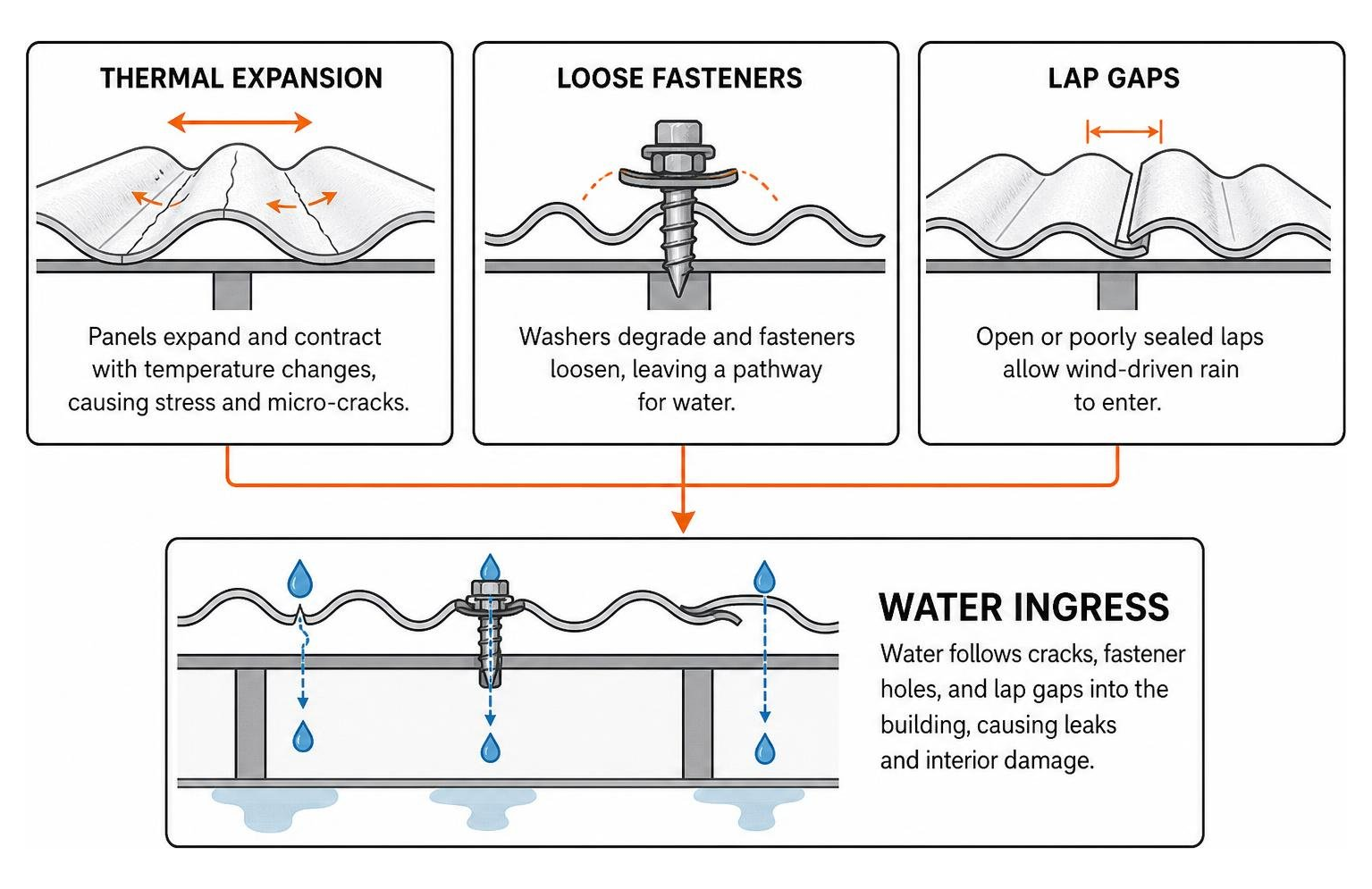
Thermal Expansion and Micro-Cracks
Rigid cementitious panels expand and contract continuously with seasonal and daily temperature swings. Because standard cement sheets lack elasticity, this thermal cycling produces significant surface stress. Over time, brittle spots develop hairline fractures that widen into structural micro-cracks. Moisture seeps into these fissures, accelerating surface degradation. Applying innovative repair technologies such as fiber-reinforced acrylics helps bridge these moving cracks before they split the panel completely.
Degraded Fasteners and Loose J-Bolts
Corrugated cement sheets are typically anchored directly to purlins using heavy-duty drive screws or J-bolts fitted with rubber or EPDM washers. Constant exposure to UV radiation and ambient weathering causes these flexible washers to shrink, harden, and crack. Once a washer perishes, wind-driven rain easily channels down the bolt shank into the building interior. In severe storms, unsealed fastener holes can quickly turn into an emergency roof repair situation if water runs directly onto electrical wiring or production equipment.
Overlap Gaps and Ridge Cap Vulnerabilities
Corrugations must interlock cleanly across side laps and end overlaps. Over time, structural settling, strong wind uplift, and building movement open small gaps between adjoining panels. Capillary action draws surface water horizontally across these shallow seams, pulling moisture uphill and dumping it beneath the roofline. Similar vulnerabilities occur along ridge caps and flashing transitions on residential roofing additions, where rigid mortar beds crack and let driving rain slip past.
Pinpointing the Exact Leak Source Across Cement Panels
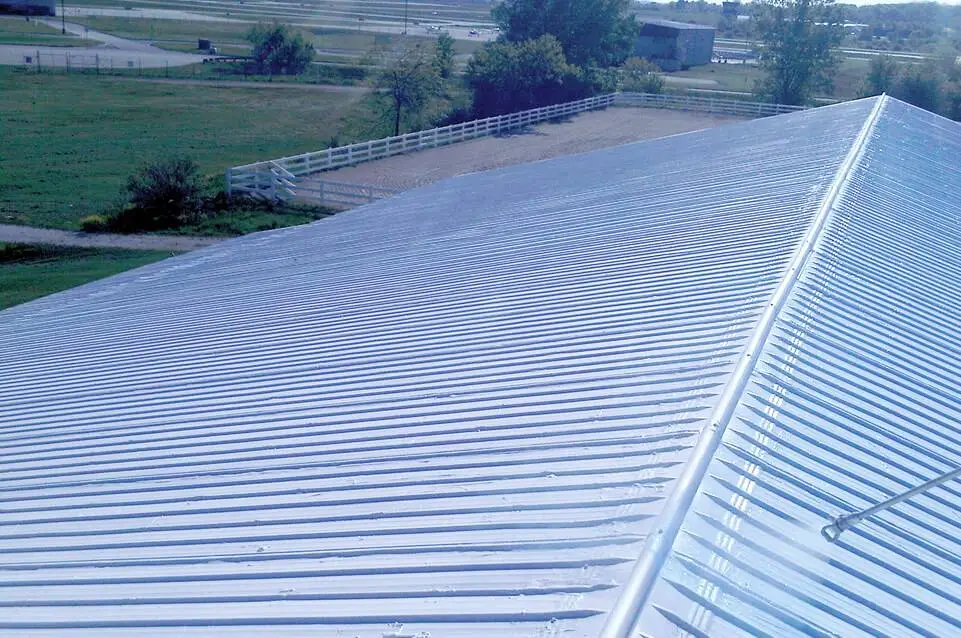
Water is a persistent detective that always follows gravity and surface tension, meaning where it drips inside rarely matches where it entered outside. Finding the actual source requires systematic tracing rather than guesswork.
Visual Roof Inspections and Interior Water Mapping
Begin by stepping inside the building during or immediately after rainfall. Trace water stains on ceiling tiles, wet patches on insulation, or damp runs along steel purlins and timber rafters uphill to their highest point.
Once on the roof, schedule structured roof inspections to evaluate the exterior surface:
- Inspect the valleys of corrugations where water pools or moves in high volume.
- Examine every fastener within a 6-to-10-foot radius uphill from internal dampness.
- Look for spiderweb cracking, surface chalking, spalling, and loose lap joints.
- Check perimeter flashing, ridge caps, and parapet walls for cracked mortar or missing sealant.
Advanced Detection: Hose Testing and Thermal Imaging
When hairline cracks are invisible to the naked eye, a controlled hose test can isolate tricky leaks. Starting at the lowest edge of the suspected roof plane, have a technician run water over individual sheet laps and fastener lines for 10 to 15 minutes per section while another person watches inside. Move upward slowly to prevent false readings.
For commercial properties where routine roof maintenance is critical, professionals utilize non-destructive diagnostic tools:
- Infrared Thermography: Infrared cameras detect temperature differentials caused by moisture trapped beneath cement panels or within insulation.
- Pinless Moisture Meters: Electronic impedance meters measure moisture content within cementitious substrates without drilling holes.
- Smoke Testing: Pressurized non-toxic smoke introduced beneath the roofing assembly reveals unsealed overlaps and open fastener holes as it escapes through the top.
Choosing the Right Cement Sheet Water Leakage Solution
Selecting the proper repair material prevents you from having to redo the job after the next major storm. A mismatch between the substrate and the patching compound often causes premature bonding failure.
| Material Type | Typical Service Life | Best Use Case | Elasticity & Movement | Application Notes |
|---|---|---|---|---|
| Neutral-Cure Silicone | 3–5 Years | Bolt heads, small hairline cracks | Moderate (150–250%) | Requires clean, dry substrate; paintable formulas available |
| Polyurethane Sealant | 5–8 Years | Structural joints, active cracks, overlaps | High (300–500%) | Excellent adhesion to porous cement; highly abrasion-resistant |
| Aluminum Butyl Tape | 2–4 Years | Emergency patches, lap seams, gutter joints | Moderate (Self-fusing) | Instant adhesion; provides high UV reflection |
| Elastomeric Liquid Membrane | 8–12 Years | Full sheet restoration, multiple micro-cracks | Superior (300–600%) | Multi-coat system; embed reinforcing fabric for maximum strength |
Finding a cost effective roof repair comes down to balancing immediate material expenses against the expected service lifespan of the installation.
Sealants, Butyl Tapes, and Quick-Fix Materials
Standard household silicone containing acid-curing agents (acetoxy) should never be applied to cement sheets, as the acetic acid reacts negatively with alkaline cement binders. Instead, choose high-grade neutral-cure silicone or polyurethane caulks. Polyurethane sealants remain flexible through extreme temperature swings and bond tightly to porous concrete and fiber cement surfaces.
For immediate, weather-resistant patches, heavy-duty butyl tape backed with heavy aluminum foil creates a dependable barrier over leaking laps and ridge caps. The butyl core flows into minor surface textures, while the metallic face shields the compound against harsh UV rays.
Elastomeric Membranes as a Long-Term Cement Sheet Water Leakage Solution
When sheets suffer widespread crazing, porosity, or multiple fracture lines, localized caulking is only a short-term fix. High-performance elastomeric liquid membranes—particularly polyurethane-modified acrylic systems—create a continuous, seamless waterproof barrier over the entire roof plane.
Technical performance benchmarks for premium liquid systems demonstrate that fiber-reinforced acrylic membranes can resist up to 7 bars of hydrostatic pressure. Premium liquid coatings also provide anti-carbonation defense to protect underlying steel structures, offering superior roof repair durability across demanding operating environments. For interior wet-wall applications where fiber cement backing board is utilized, specialized wallboard products leverage embedded water-block technology to halt moisture transmission before it compromises finished assemblies.
Safety Guidelines for an Asbestos Cement Sheet Water Leakage Solution
Many older corrugated cement sheet roofs installed before modern regulations contain chrysotile asbestos fibers. If your building features aged asbestos-cement panels:
- Never dry-sweep, scrape, grind, or pressure-wash the panels. Mechanical abrasion releases hazardous respirable fibers into the air.
- Always work with wet surfaces. Mist areas lightly with water before cleaning to keep loose particles bound to the substrate.
- Wear appropriate PPE. Use a properly fitted half-face or full-face respirator equipped with P100 (HEPA) particulate filters, disposable coveralls, and nitrile gloves.
- Use encapsulation coatings. Instead of disturbing or cutting the sheets, apply liquid rubber or elastomeric encapsulating coatings that lock down fibers while sealing water pathways.
Step-by-Step Cement Sheet Roof Leak Repair Process
Executing a durable roof repair on corrugated cement panels requires careful surface preparation, proper safety staging, and systematic multi-layer application. Because weathered cement sheets can be brittle, always utilize crawl boards, roof ladders, and personal fall arrest harnesses anchored to certified attachment points.
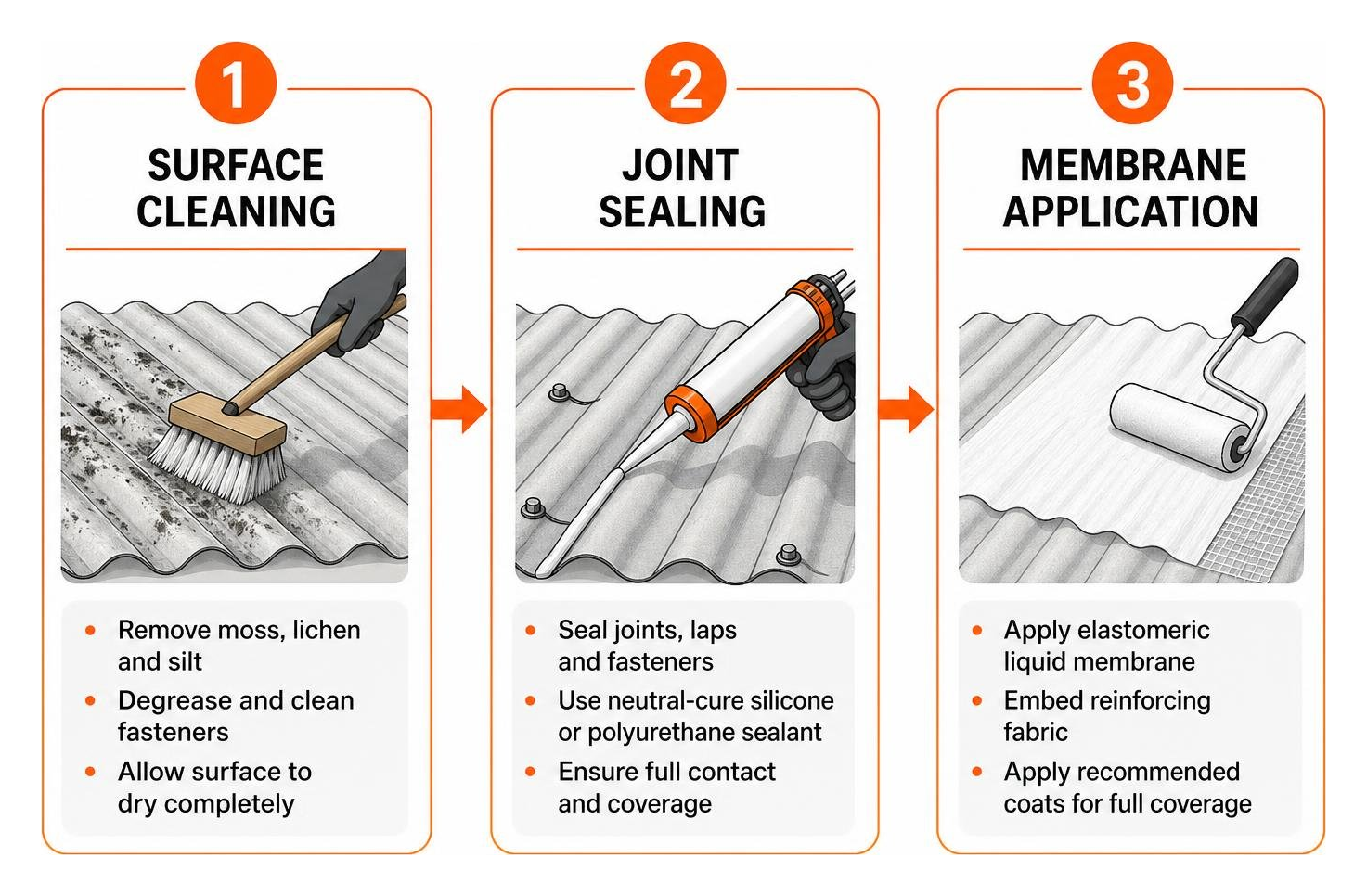
Step 1: Surface Cleaning and Substrate Preparation
- Clear Organic Growth: Remove moss, lichen, and accumulated silt using a soft-bristle nylon brush and a mild biocidal roof wash. Rinse gently with low-pressure water.
- Degrease and Clean Fasteners: Wire-brush corroded screw heads and treat oxidized J-bolts with a rust-inhibiting primer.
- Dry Thoroughly: Allow the cement sheets to dry completely. Trapped moisture under sealants or membranes causes bubbling and bond delamination.
Step 2: Joint Sealing, Crack Bridging, and Fastener Treatment
- Address Deep Cracks: For cracks wider than 1/16 inch, clean loose debris from the fissure and apply a flexible polyurethane caulk directly into the void, smoothing it flush with a putty knife.
- Detail Fasteners: Tighten loose J-bolts carefully—do not over-torque and crack the sheet. Encapsulate every bolt head and washer with a generous dollop of polyurethane sealant or liquid rubber.
- Bridge Overlaps: Seal open corrugation lap seams with heavy-duty aluminum-backed butyl tape or pre-treat them with a continuous bead of polyurethane sealant.
Step 3: Membrane Coating and Reinforcing Fabric Application
- Apply Penetrating Primer: Roll on an acrylic- or silane-based primer across the repair zone to consolidate chalky cement surfaces and ensure robust adhesion.
- Embed Reinforcing Fabric: Following technical protocols seen in specifications like the USG Durock Liquid Membrane Submittal, roll out an initial wet base coat of elastomeric membrane (15–20 mils wet film thickness). Immediately embed stitch-bonded polyester reinforcing fabric or fiberglass scrim into the wet coating using a roller to eliminate air pockets and wrinkles.
- Apply Topcoats: Once the base layer is touch-dry (typically 2 to 4 hours depending on ambient temperature), apply a second coat at a 90-degree right angle (cross-coat technique) to the first layer. Apply a final third undiluted topcoat to achieve a uniform, pinhole-free barrier of at least 35 to 45 mils dry film thickness.
Frequently Asked Questions About Cement Sheet Roof Leak Repairs
How long does a typical cement sheet roof repair last?
A quick fix using simple hardware-store silicone or asphalt mastic generally lasts 6 to 12 months before UV exposure and joint movement cause it to peel. Conversely, a professional-grade repair utilizing polyurethane crack sealant and a fabric-reinforced elastomeric liquid membrane typically lasts 8 to 12 years with minimal maintenance.
What is the most durable waterproof material for cement sheets?
Fiber-reinforced, polyurethane-modified elastomeric acrylic membranes represent the most durable repair and restoration material. These liquid-applied systems offer upwards of 300% to 500% elongation, allowing them to stretch and flex alongside the cement panels through drastic thermal cycles without splitting or debonding.
When should property owners call a professional roof repair contractor?
While minor fastener caulking or small patch jobs can be managed in-house, you should contact a licensed roof repair contractor if:
- More than 20% to 30% of your roof panels show deep structural cracking or widespread spalling.
- The roof contains friable asbestos-cement materials requiring regulated containment.
- Leaks are widespread across internal trusses, indicating structural framing rot or hidden deck deterioration.
- The pitch, height, or fragility of the roof panels poses serious fall hazards requiring commercial-grade scaffolding and fall arrest systems.
Conclusion
A leaking cement sheet roof does not automatically mean you need a complete tear-off and replacement. By systematically tracing moisture entry points, addressing deteriorated fasteners, and applying modern multi-layer elastomeric coatings, you can restore full watertight integrity to your structure for years to come.
Mid-State Construction & Roofing, Inc. brings industry-leading training, hands-on quality assurance, and dedicated project supervision to every commercial and residential roofing project across Central Illinois. If your property is battling persistent leaks or aged cement panels, contact our team for an exhaustive inspection and dependable, long-term roofing protection.