
Mid-State Construction & Roofing Inc.
Roofing Safety and Best Practices: Ensuring a Secure Work Environment
Explore essential roofing safety measures and best practices to ensure a secure work environment. Learn about the importance of safety gear, proper training, and regulatory compliance in the roofing industry.

Introduction to Roofing Safety
Roofing is one of the most dangerous professions, with high risks associated with heights, heavy materials, and unpredictable weather. Ensuring safety in roofing projects is critical to protect workers and property.
Implementing robust safety measures and adhering to best practices can significantly reduce the risk of accidents and enhance overall efficiency on the job.
- Understanding the inherent risks in roofing work.
- Importance of a safety-first attitude in roofing projects.
Essential Safety Gear for Roofing
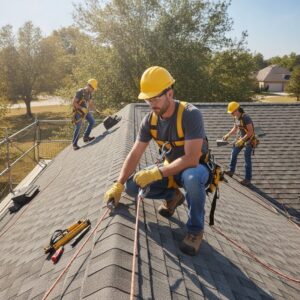
Wearing appropriate safety gear is fundamental to reducing risks on roofing sites. Essential gear includes helmets, non-slip shoes, safety harnesses, and protective eyewear.
Investing in quality safety equipment not only ensures compliance with safety regulations but also enhances the confidence and productivity of roofing teams.
- Use of helmets to protect against head injuries.
- Harnesses and guardrails to prevent falls.
- Non-slip footwear for better grip on sloped surfaces.
Training and Education for Safe Roofing
Proper training is crucial for roofing safety, equipping workers with the knowledge and skills to handle tools and materials safely.
Regular safety training sessions and updates on new safety protocols help maintain high safety standards across all projects.
- Comprehensive training sessions for new hires.
- Ongoing education on safety protocols and equipment use.
Regulatory Compliance and Safety Standards
Compliance with local and national safety regulations is a legal and ethical obligation for roofing companies.
Following OSHA guidelines and other safety standards ensures that roofing projects meet required safety benchmarks, protecting workers and clients alike.
- Adhering to OSHA's safety standards.
- Implementing site-specific safety plans for each project.
Emergency Preparedness in Roofing
Being prepared for emergencies is a critical component of roofing safety. This includes having first-aid kits on site and ensuring all workers know the emergency procedures.
Regular drills and emergency response training can significantly improve the response time and effectiveness in case of an accident.
- Stocking first-aid kits on all job sites.
- Conducting regular emergency response drills.
Frequently Asked Questions
What are the most common roofing safety hazards?
Common roofing safety hazards include falls from heights, slips on wet or unstable surfaces, and injuries from handling heavy materials.
How often should safety training be conducted for roofing teams?
Safety training should be conducted regularly, with at least annual updates and additional sessions whenever new safety procedures or equipment are introduced.
Prioritize Safety in Your Roofing Projects
Ensure your next roofing project is completed safely and efficiently by partnering with a contractor who values safety as much as you do. Contact us today to learn more about our safety protocols and how we can help you achieve a secure roofing solution.