
Flat Roof Leak Repair Starts With Finding the Source
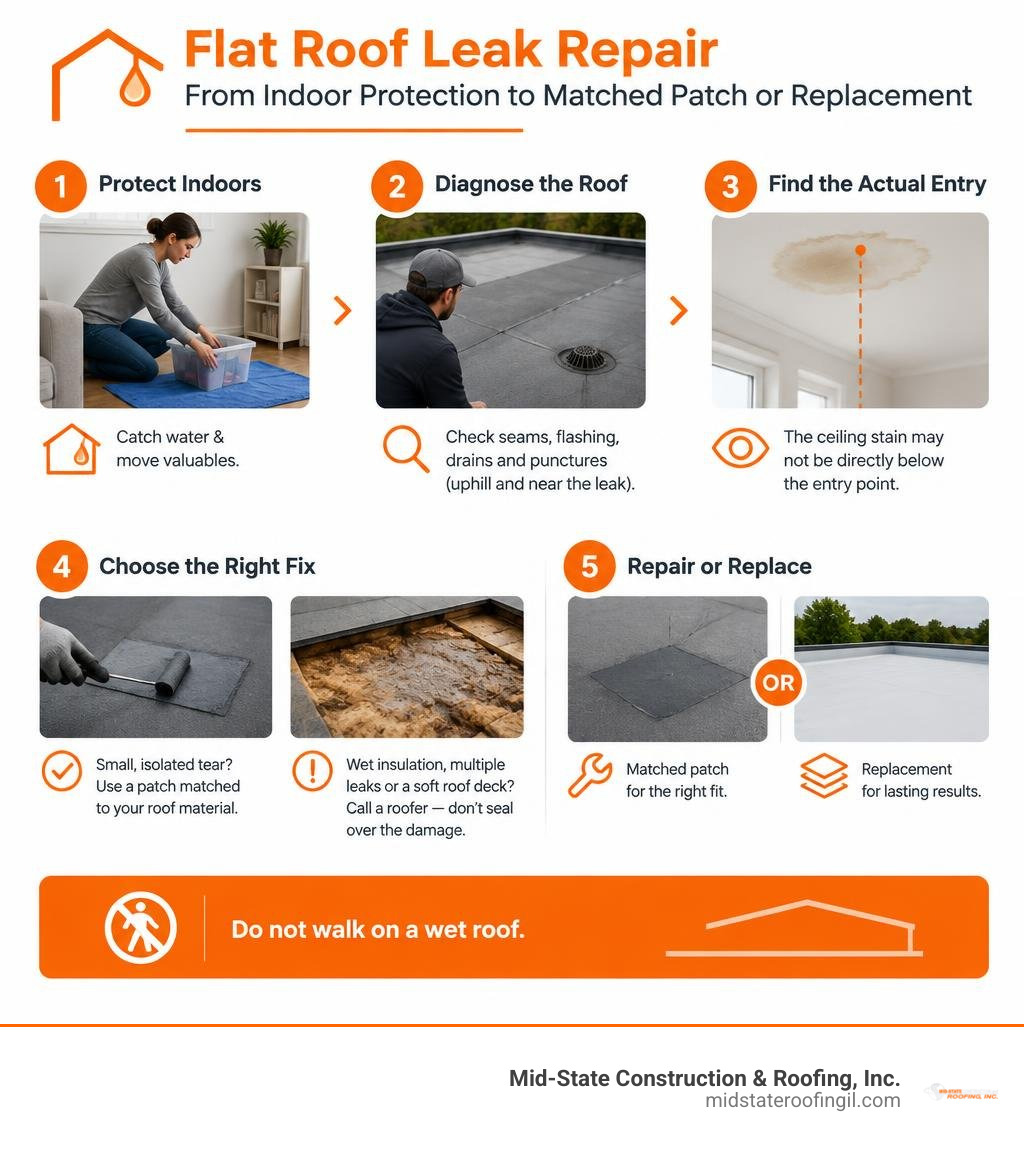
For flat roof leak repair, first catch the water indoors and move valuables out of its path. When the roof is dry, check seams, flashing, drains, and punctures near and uphill from the leak. The ceiling stain may not be directly below the entry point. A small, isolated tear may take a patch made for that roof material. If you find wet insulation, several leaks, or a soft roof deck, call a roofer rather than sealing over the damage. Do not walk on a wet roof.
I’m Virgil Strauch, a Beecher City-based business leader with experience in planning and project oversight. That background guides my approach to flat roof leak repair: identify the cause before choosing a fix.
Flat roof leak repair word list:
Flat roof leak repair: find the source and stop water intrusion
How to locate a leak for flat roof leak repair
Start inside. Note where water appears, when it shows up, and whether the leak follows heavy or wind-driven rain. Look for damp decking, wet insulation, mold, or dark marks, but remember water can travel along roof layers or framing before it drips. The stain may be several feet from the entry point.
On a dry day, inspect the roof from a safe position for open seams, punctures, blisters, cracked flashing, and damaged edges. Check around drains, scuppers, HVAC curbs, vents, and skylights, especially on the uphill side of the indoor stain. Leaves or other debris blocking a drain can leave water ponding, which can speed up wear and stress seams.
For a better overview of typical trouble spots, see our guide to common flat roofing issues. A professional may use an infrared scan or moisture survey to locate trapped water without opening large areas. A controlled hose test can also help, but test one small section at a time while someone checks inside. Do not flood the roof or test it during a storm. For basic EPDM leak-finding and patching background, consult This Old House’s rubber-roof guide.

Emergency flat roof leak repair and safe temporary steps
If water is coming in, protect people and belongings before thinking about the roof.
- Place buckets or a container under drips and move furniture, electronics, and other valuables.
- If water is near lights, outlets, or wiring, avoid touching wet areas and contact a qualified electrician if needed.
- A bulging ceiling can hold a dangerous amount of water. Keep people clear and get professional help rather than standing beneath it.
- Call a roofer to arrange an inspection and temporary protection.

A tarp can sometimes protect a roof temporarily, but installing one means working at height. Do not climb onto a wet, icy, windy, or unstable roof, and never step on skylights. Follow emergency roof repair steps while waiting for a lasting repair.
Choose a safe, material-matched repair and know when to call a roofer
DIY flat roof leak repair: tools, materials, and safety
A small, accessible puncture on a sound roof may be manageable for someone experienced with the specific roofing system. Useful supplies can include a tape measure, soft brush, utility knife, gloves, eye protection, membrane cleaner, manufacturer-approved primer, roller, compatible patch, and matching sealant. Read product instructions: roof materials and repair products are not interchangeable.
Work only in suitable dry weather, and never take risks near an edge or on a surface that could be slippery or weak. A DIY patch is not a good choice if the roof is steep enough to be unsafe, the damage is hard to locate, the deck feels soft, insulation is wet, or leaks keep returning. Cutting into the roof, removing wet insulation, or repairing multiple failures can create more damage if done incorrectly. DIY work may also affect warranties; check the roof and product requirements before starting.
Patch EPDM, TPO, and modified bitumen correctly
Use a repair system made for the roof material. A product that sticks to one membrane may fail on another.
| Roof material | Typical repair approach | DIY suitability |
|---|---|---|
| EPDM | Clean and prime the surface, then apply a compatible pressure-sensitive patch and lap sealant as directed. | A small, isolated puncture may be suitable for a capable DIYer. |
| TPO | Clean the membrane and use a compatible patch with heat-welded seams. | Usually best handled by a roofer with welding equipment and experience. |
| Modified bitumen | Repair with compatible bitumen materials and, where needed, reinforcing fabric. | Avoid torch work as a DIY project; open flames create serious fire hazards. |
Seam separation and flashing failures often need more than surface sealant. If damage reaches the insulation or roof deck, those layers may need repair before the membrane is patched. Our EPDM roofing guide and modified bitumen overview explain how these systems differ.
Estimate costs, decide whether to replace, and prevent repeat leaks
2026 flat roof leak repair cost and what changes the estimate
There is no single price for a leak repair in 2026. The final estimate depends on the roof material, how easy it is to access, how far water has traveled, and whether the repair involves only the membrane or also wet insulation, damaged decking, flashing, or drainage. A small patch may take little material but still involve a minimum service charge for travel, setup, safety equipment, and cleanup.
As a broad budgeting reference, repairs are sometimes estimated at about $6 to $18 per square foot of repaired area, while a minimum roof repair charge may be around $450. These are not guaranteed prices for Effingham-area work; a small job may not be priced by square footage, and extensive repairs can cost much more. Ask for a local, itemized estimate that separates diagnosis, labor, materials, and any drainage or structural work.
| Repair scope | What can affect the estimate | When to request an itemized estimate |
|---|---|---|
| Small patch or seal | Access, membrane type, minimum service charge | When the damage is isolated and the rest of the roof appears sound |
| Leak near flashing or equipment | Detail work, water travel, condition of the surrounding membrane | When the leak is near a vent, curb, wall, or roof edge |
| Larger or recurring leak | Wet insulation, damaged deck, multiple leak points | When repairs keep failing or interior damage is spreading |
| Drainage problem | Clogged or poorly placed drains, ponding, slope issues | When water remains after rain or leaks return near drains |
Wet insulation is a major cost factor. A surface patch may stop a drip briefly but leave moisture trapped below, so ask whether the estimate includes checking the underlying layers. For more on practical repair decisions, see our roof repair solutions.
Repair or replace: the 25% rule, roof lifespan, and prevention
The “25% rule” is a rule of thumb, not a universal code requirement: if repairs affect more than about a quarter of the roof, compare the cost and expected life of continued repairs with replacement. The right decision also depends on the roof’s age, condition, and how much insulation or decking is wet. Many flat roofs last about 15 to 30 years, depending on the system, installation, drainage, and maintenance.
A targeted repair may make sense for one small leak on an otherwise sound roof. Replacement deserves a closer look if the membrane is brittle, leaks recur across the roof, the deck is damaged, or the repair area is extensive. Before a major project, check local permit requirements and the terms of any existing roof warranty. Our guides to commercial flat roof life expectancy and flat roof replacement costs can help with planning.
Preventive maintenance helps catch small issues before water reaches the building:
- Inspect the roof in spring and fall, and after major storms.
- Clear debris from drains and scuppers.
- Check seams, flashing, roof edges, and rooftop equipment for visible damage.
- Watch for ponding water and arrange an assessment if it remains after conditions allow the roof to dry.
- Keep records and photos of repairs so changes are easier to track.
At Mid-State Construction & Roofing, Inc., we provide residential and commercial roof repair, replacement, installation, and maintenance in the Effingham area. Our trained crews, quality checks, and project supervision help us focus on the cause of a leak—not just the stain it leaves behind. Property owners in the area can contact our Altamont roofing team to discuss an inspection or estimate.