
What Is the Best Coating for a Metal Roof: Restore or Replace?
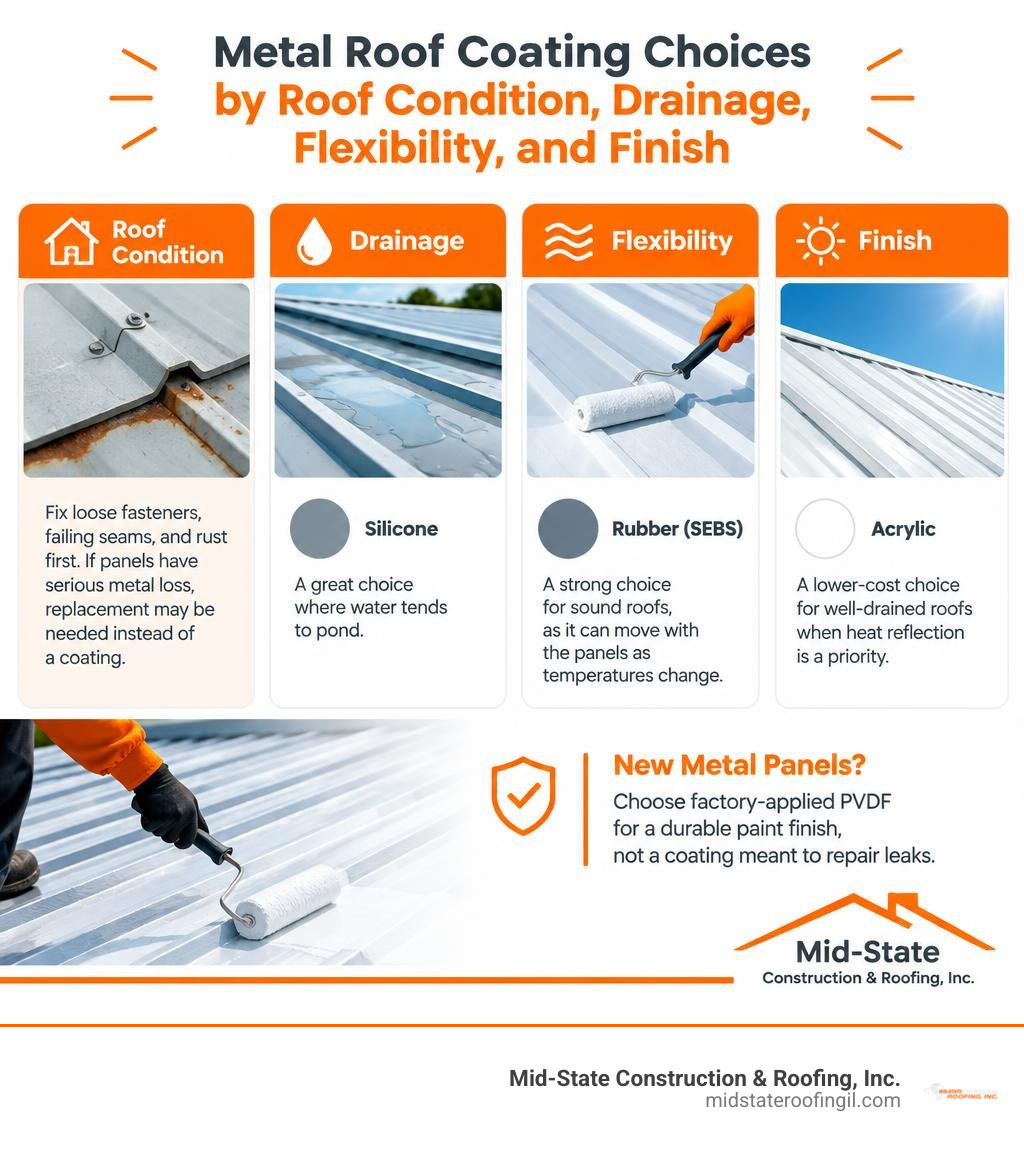
For a sound metal roof, a flexible rubber (SEBS) coating is often a strong choice because it can move with the panels as temperatures change. Silicone is worth considering where water tends to pond. Acrylic can be a lower-cost choice for a well-drained roof when heat reflection is a priority. If you are buying new metal panels, factory-applied PVDF is a durable paint finish, not a coating meant to repair leaks.
Start with the roof’s condition, not the coating label. Loose fasteners, failing seams, and rust need attention first. Panels with serious metal loss may need replacement rather than a coating.
I’m Virgil Strauch, and my experience in business leadership shapes how I weigh cost, risk, and upkeep when answering “what is the best coating for metal roof.” This guide will help you compare the options before you decide whether restoration makes sense.
What Is the Best Coating for Metal Roof Longevity and Protection?
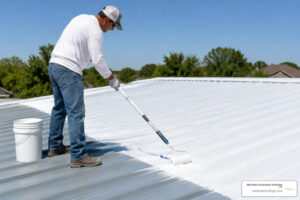
Every commercial building owner or homeowner with a metal roof eventually faces a crossroad: panels start looking dull, fasteners back out, rust creeps along the overlaps, and sudden seasonal leaks appear. The instinct might be to price out a massive replacement project, but liquid-applied restoration membranes can bridge that gap at a fraction of the cost.
Metal is an active substrate. Unlike asphalt or concrete, steel sheets expand and contract dramatically when temperatures swing. In Central Illinois—where our teams at Mid-State Construction & Roofing work across Effingham, Shelbyville, Vandalia, and Altamont—temperatures regularly cycle from sub-zero winter chills to scorching mid-summer heat. If your coating lacks high tensile strength and elasticity, it splits, traps water against the metal, and speeds up structural decay.
Choosing the right chemistry requires matching the membrane’s characteristics to your roof’s profile, slope, and climate exposure. Our step by step guide to find the best roof coating for your home breaks down property evaluation, but the comparison table below outlines how the leading formulations perform across critical metrics.
| Coating System | Durability / Lifespan | Typical Material Cost / Sq. Ft. | Elongation & Flexibility | UV & Weather Resistance | Best Use Case |
|---|---|---|---|---|---|
| SEBS Rubber | 15–20 Years | $1.25 – $1.75 | Exceptional (500%+) | High | Standing seam & corrugated roofs with heavy thermal movement |
| Silicone | 10–20 Years | $1.50 – $2.50 | Moderate (150%–300%) | Exceptional | Flat or low-slope metal profiles subject to standing or ponding water |
| Acrylic / Elastomeric | 7–12 Years | $0.75 – $1.25 | Moderate (200%–350%) | High (Bright White) | High-pitch roofs prioritizing energy efficiency on a budget |
| PVDF (Factory Finish) | 30–40+ Years | Premium (Coil-applied) | High (Pre-formed) | Maximum (Delta E < 5) | New metal panel installations demanding superior aesthetic retention |
| SMP (Factory Finish) | 15–25 Years | Moderate (Coil-applied) | Moderate (Prone to micro-fractures) | Moderate (Delta E < 7) | Budget-conscious agricultural or residential utility builds |
What Is the Best Coating for Metal Roof Flexibility: SEBS Rubber vs. Silicone
When considering field-applied coatings for thermal movement, SEBS (Styrene-Ethylene-Butylene-Styrene) thermoplastic rubber stands out. SEBS formulations deliver elongation rates exceeding 500% with a 99.99% memory recovery rate. When your roof panels stretch under the midday sun and shrink at dusk, SEBS moves naturally with the seams without tearing or pulling away from fastener heads.
Silicone coatings offer distinct benefits, particularly on roofs with low slope or drainage issues. High-solids silicone holds up against standing water and creates a seamless barrier against moisture intrusion. When properties need localized care, our silicone coating roof repair in shelbyville il provides reliable, water-resistant detailing.
However, silicone has trade-offs. It offers lower tear strength than SEBS, accumulates surface dirt more readily over time, and presents recoatability hurdles: nothing adheres to cured silicone except fresh silicone, meaning you cannot easily switch coating types later without complete removal. For deeper technical comparisons on movement handling, review the Inland Coatings guidance on rubber vs silicone roof coatings.
What Is the Best Coating for a Metal Roof Paint Finish: PVDF vs. SMP
If you are specifying new metal panels rather than restoring an aging roof, the choice centers on factory-applied coil finishes rather than field-applied liquid elastomeric coatings. The two dominant options are Polyvinylidene Fluoride (PVDF, often known by the brand name Kynar 500®) and Silicone-Modified Polyester (SMP).
- PVDF (Fluoropolymer Resin): The recognized standard for architectural finishes. Containing at least 70% fluoropolymer resin, PVDF delivers superior color stability, chalk resistance (often scoring 8 to 10 out of 10), and tight fade limits (warranted within 5 Delta E units over decades). If you are exploring panel profiles, understanding the benefits of standing seam metal roofing in effingham and standing seam metal roofs how to choose the right one for your home will help you pair the right paint system with your building’s architecture.
- SMP (Silicone-Modified Polyester): Blends polyester resin with roughly 30% silicone. While harder and more scratch-resistant during transit and installation, SMP is less flexible than PVDF. Over time, UV exposure can cause color shift up to 7 Delta E units, and chalk resistance can drop to a rating of 6.
For a detailed analysis of coil-coating chemistry, consult the METALCON guide on PVDF versus SMP coatings.
Acrylic and Elastomeric Coatings for Heat Reflection and Budget Balance
Water-based acrylic coatings offer a practical, cost-effective option for well-drained metal roofs. Bright white acrylic coatings deliver a Solar Reflectance Index (SRI) that reflects up to 90% of solar radiation away from your facility. This reflectivity can drop interior facility temperatures by 7°F to 10°F during peak summer months, lowering cooling equipment loads.
However, acrylics are water-based and cure via evaporation. They should not be applied to roofs with standing water, and they require ambient temperatures above 50°F during application. For properties in our service region, an acrylic roof coating in effingham il or targeted metal coating roof repair near effingham il provides reliable protection when installed over clean, positive-draining metal panels.
Evaluating Cost, Longevity, and Energy Savings
A quality roof restoration delivers substantial financial advantages when compared to a total tear-off and replacement.
- Material and Application Costs: Restoring a metal roof using a premium liquid-applied membrane typically runs between $1.25 and $2.50 per square foot for materials, compared to full panel tear-off and replacement costs of $8.00 to $14.00 per square foot. Review whats the typical cost of metal roof installation in illinois for detailed regional replacement economics.
- Extended Service Life: A properly applied two-coat restoration extends roof life by 15 to 20 years. When the warranty period concludes, the membrane can often be cleaned, primed, and recoated without tearing off the existing roof.
- Operational Advantages: Fluid-applied systems avoid business downtime. Through our commercial coating restoration services, our crews complete seamless applications without leaving your facility exposed to the elements during construction.
Best Practices for Application, Maintenance, and Maximizing ROI
A high-performance coating is only as reliable as the surface beneath it. Proper metal maintenance is essential to preserving your roof system, and knowing how to take care of your metal roof helps you spot minor wear before water intrusion occurs.
Surface Preparation, Rust Mitigation, and Structural Criteria
According to the National Roofing Contractors Association (NRCA), improper surface preparation causes the vast majority of early coating failures. A complete restoration should follow a clear preparation sequence:
- Structural Assessment: Inspect the roof for panel integrity. If roof panels exhibit advanced rust with 30% or more section thickness loss, they must be replaced rather than coated. Coating over structurally compromised steel hides safety hazards and fails building code expectations. Review the Hutchinson Design Group white paper for MBMA on metal roof coating limitations and preparation for engineering insights.
- Pressure Washing & Degreasing: Clean all dirt, grease, bird droppings, and loose chalking paint using a minimum 3,000 PSI pressure washer.
- Rust Remediation: Wire-brush heavy scale and apply a dedicated rust-inhibiting zinc or epoxy primer. Learn practical tips in our guide to diy metal roof rust repair and long term protection.
- Fastener and Seam Detailing: Tighten or replace backed-out fasteners with oversized screws. Encapsulate all fastener heads with heavy elastomeric mastic, and reinforce panel end-laps and side seams with polyester fabric embedded in a base coat. For active leaks, our team handles leaking metal roof repair in effingham il before applying full-field top coats.
Professional Installation, Warranties, and Building Code Compliance
Applying a fluid membrane requires careful quality control. The 2018 International Building Code (IBC) and local municipal standards require coatings to meet specific fire classifications and structural compatibility standards.
At Mid-State Construction & Roofing, Inc., we focus on strict quality assurance across every project in Beecher City, Effingham, Shelbyville, Altamont, Vandalia, Ramsey, Salem, Hillsboro, and Litchfield. Our field supervisors monitor wet film thickness (WFT) throughout application to confirm the system cures to the manufacturer’s specified dry film thickness (DFT).
Before choosing a contractor for your metal roof project, confirm they address these key points:
- Do they perform initial adhesion pull-tests on your specific metal finish?
- Do they provide joint manufacturer-backed labor and material warranties ranging from 10 to 20 years?
- Are their crews trained and equipped with OSHA-compliant fall protection systems?
- Do they provide a detailed pre-coating repair schedule for fasteners, flashing, and penetrations?
When you are ready to explore your restoration options, connect with our team for expert commercial and residential roofing solutions. We will inspect your roof, evaluate panel thickness, and recommend the right system to protect your building for decades to come.