
Don’t Panic When You Need a Roofer on Short Notice
When You Need a Roofer Fast, Start With Safety
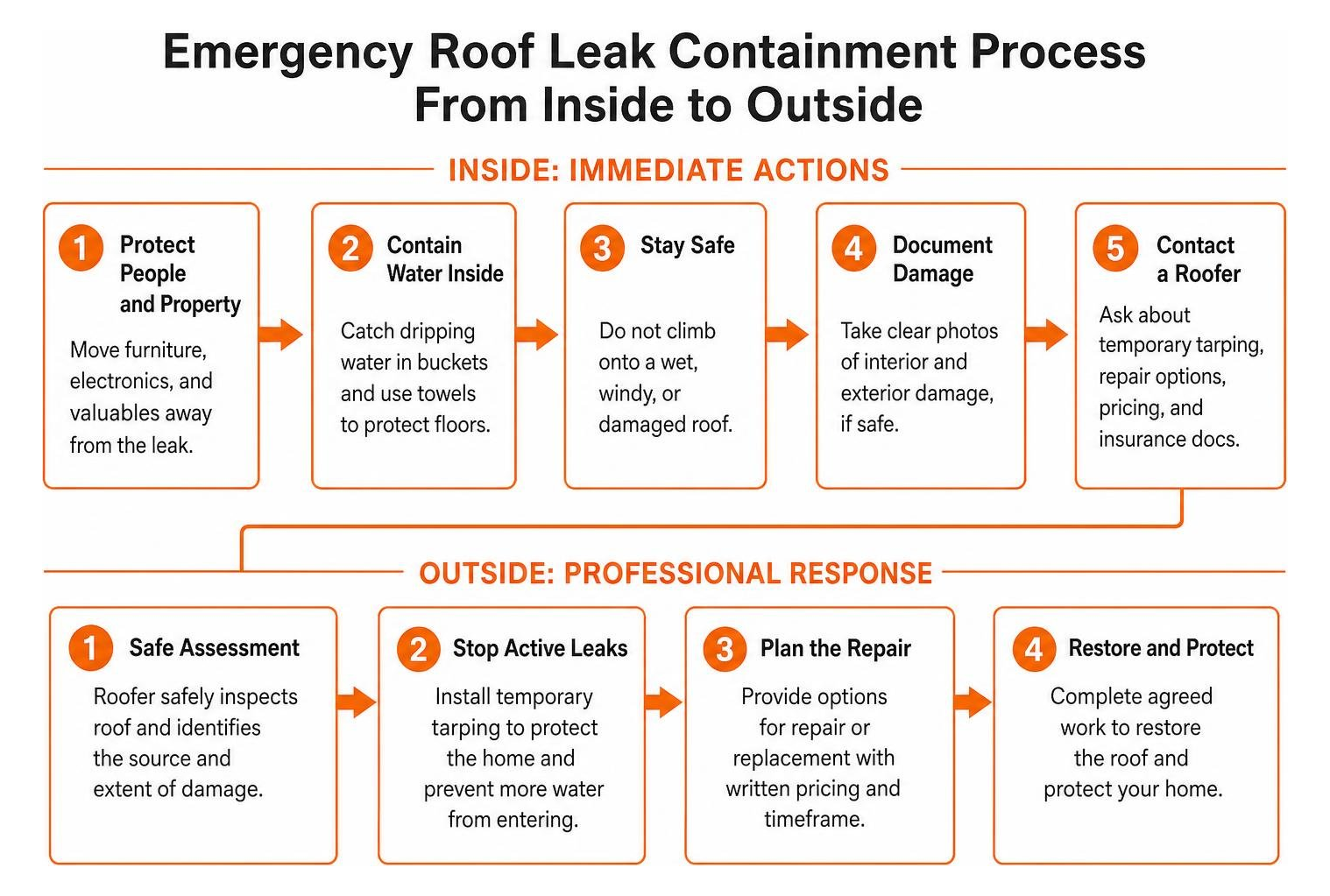
If you need a roofer on short notice, protect people and limit water damage first, then call a licensed, insured local roofing contractor for an inspection and emergency repair plan.
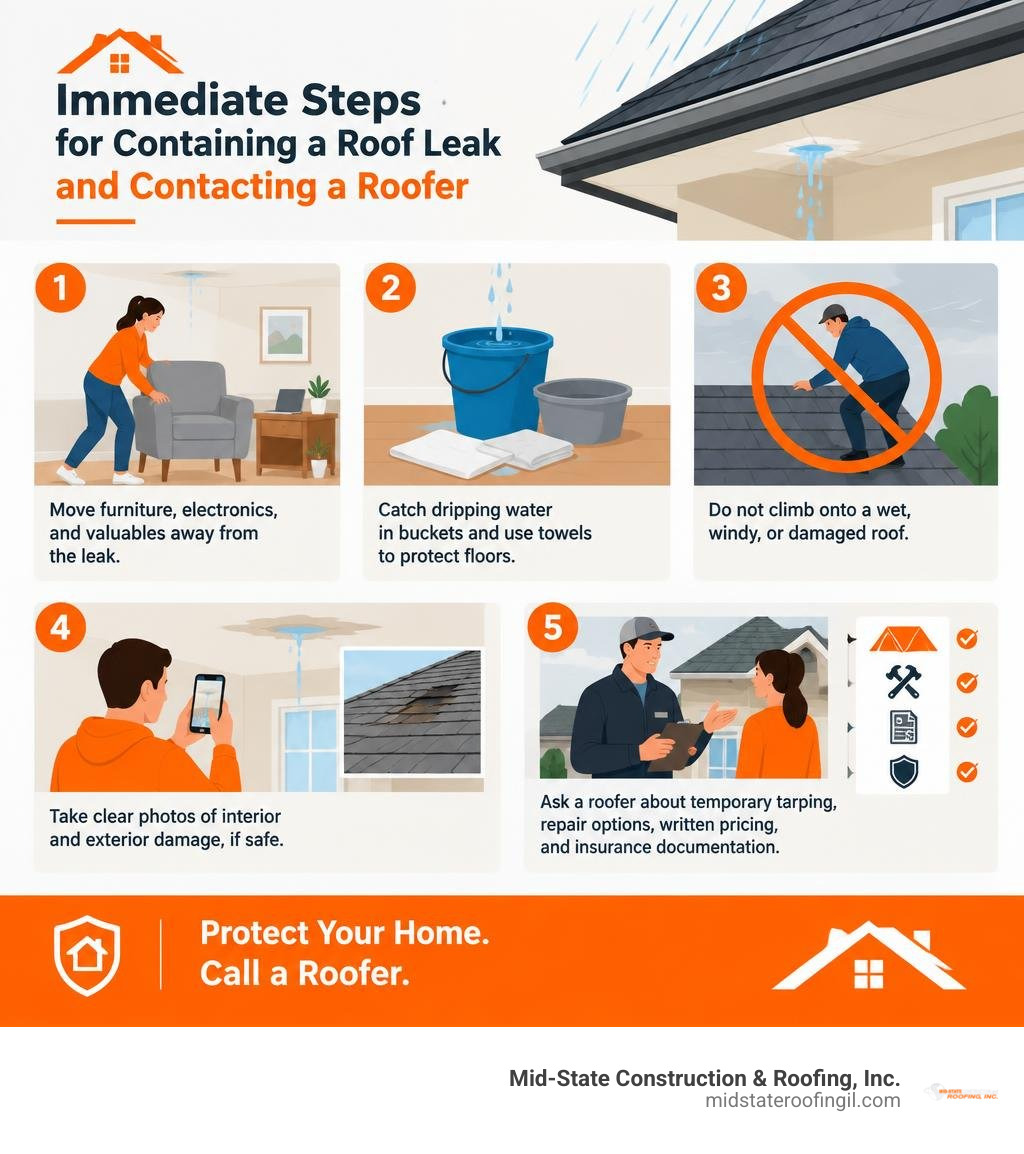
- Move furniture, electronics, and valuables away from the leak.
- Catch dripping water in buckets and use towels to protect floors.
- Do not climb onto a wet, windy, or damaged roof.
- Take clear photos of interior and exterior damage, if safe.
- Ask a roofer about temporary tarping, repair options, written pricing, and insurance documentation.
A small leak can sometimes be repaired, but missing shingles, storm damage, sagging areas, widespread wear, or a roof near the end of its expected life may call for replacement. Fast action helps prevent soaked insulation, mold, damaged drywall, and more costly structural repairs. The Federal Emergency Management Agency recommends documenting damage and contacting qualified contractors promptly after a storm to reduce long-term structural risk.
I am Virgil Strauch, a business leader from Beecher City, Illinois, with practical experience in planning, operations, and guiding teams through urgent decisions. When the thought is “i need a roofer,” my focus is on clear next steps, dependable local service, and decisions that protect your property and budget.
Emergency Steps to Take When Thinking “I Need a Roofer” Immediately
Discovering water pouring through your ceiling or finding shingles scattered across your yard after severe weather can trigger instant stress. However, resolving the issue requires a calm, methodical response. Before picking up the phone, prioritize indoor containment to protect your home’s structural framing and personal possessions.
Begin by placing deep buckets, pots, or plastic bins directly beneath the dripping water. If the water is pooling behind ceiling paint and causing a visible bulge, place a bucket beneath the lowest point and carefully puncture the center of the bubble with a screwdriver or utility knife. This relieves hydrostatic pressure, releasing water in a controlled stream rather than allowing the drywall ceiling to collapse under excessive weight.
Move furniture, rugs, electronics, and valuables out of the splash zone. Lay down heavy towels or plastic tarps to prevent moisture from seeping into subflooring. If water is dripping near electrical outlets, light fixtures, or your main breaker panel, shut off the power to those individual circuits immediately from your electrical panel to eliminate electrocution and fire hazards.
Next, safely investigate the attic if you have clean and secure access. Use a bright flashlight to trace the moisture trail. That water rarely enters directly above where it drips into your living room; it often penetrates a damaged roof penetration or seam, runs along rafters or roof sheathing, and drips through a seam in the drywall. Take clear, timestamped photos and videos of all wet framing, damp insulation, and damaged ceilings.
Never climb onto a wet, steep, or storm-damaged roof yourself. Roofing accidents account for severe injuries each year, and wet shingles provide virtually no traction. Instead, call a reputable local crew for emergency roof repair services. Professional contractors have the proper safety harnesses, ladders, and heavy-duty poly tarps required to secure the breach and stop active water infiltration until permanent repairs can be completed.
Evaluating Your Roof: Minor Repair vs. Full Roof Replacement
When unexpected damage occurs, homeowners must determine whether a localized patch will suffice or if a full tear-off is necessary. Making an informed choice depends on your roof’s age, the overall scope of the damage, and the condition of the underlying roof deck.
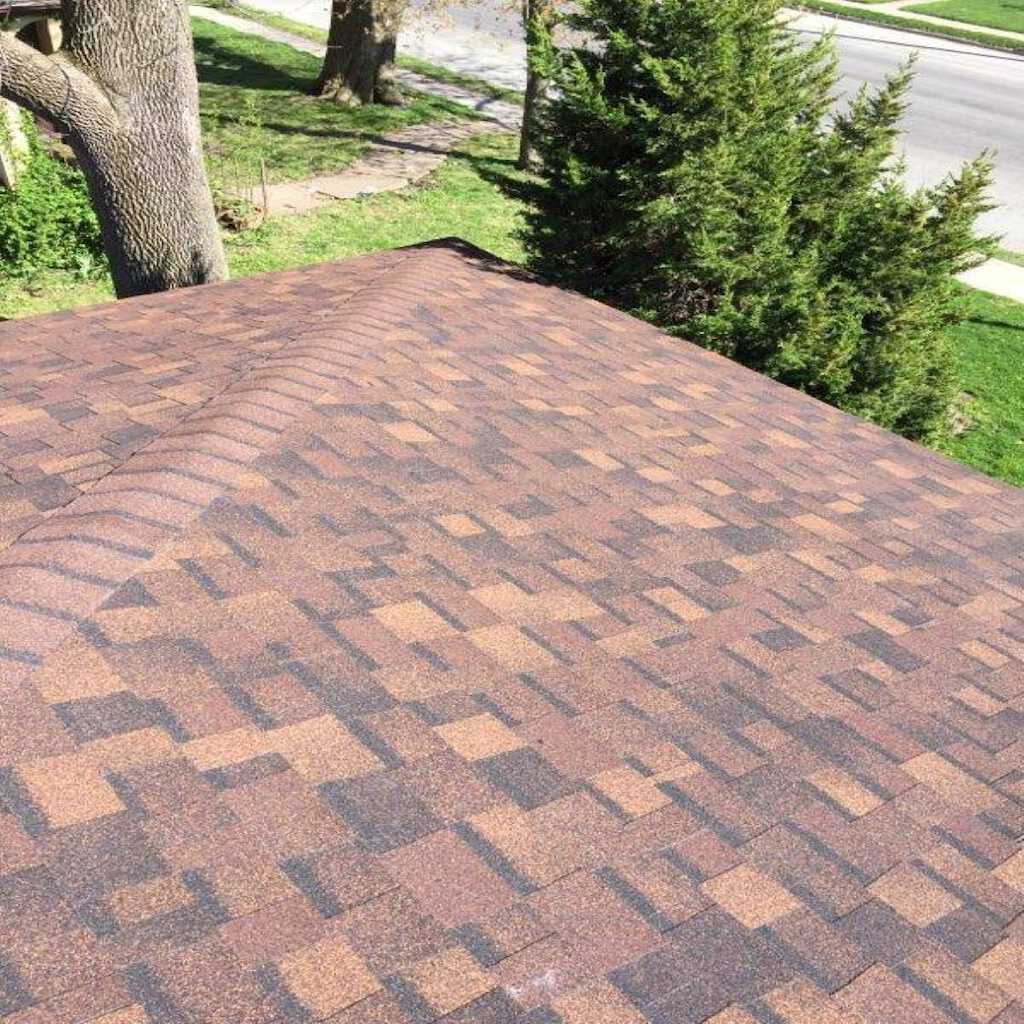
Understanding the signs of roof repair vs replacement saves you from spending money on temporary fixes for an unrecoverable system. For instance, the average cost of a minor roof repair is around $300, typically covering simple fixes like resealing a pipe boot, replacing a handful of wind-blown shingles, or repairing isolated step flashing.
However, if your asphalt shingle system is approaching the end of its 20-year expected lifespan, patching individual sections can be counterproductive. As shingles age, the asphalt dries out, granules slough off, and the material becomes brittle. Nailing into brittle shingles to install a patch often cracks adjacent shingles, creating new leak points.
| Assessment Factor | Minor Roof Repair | Full Roof Replacement |
|---|---|---|
| Damage Scope | Isolated to 1–2 small areas (under 10% of roof area) | Widespread damage across multiple slopes or decking rot |
| Roof Age | Under 12–15 years with pliable shingles | 18–25+ years, brittle materials, severe granule depletion |
| Decking Condition | Firm, solid, no bounce or wood rot | Soft, spongy, sagging, or water-delaminated plywood |
| Underlayment Status | Intact waterproof barriers in valleys and eaves | Deteriorated felt, failed ice-and-water shields |
| Cost Profile | Fast, economical fix ($300–$1,200 average) | Long-term capital investment backed by full warranties |
Assessing Visible Roof Damage and Age
Evaluating roof health begins with a ground-level visual scan. Grab a pair of binoculars and inspect every slope, valley, and penetration point. Look for telltale warning signs:
- Granule Depletion: Check your gutter downspout runoffs. Heavy accumulation of coarse, sand-like granules indicates the protective outer layer has eroded, exposing the underlying fiberglass mat to UV degradation.
- Curling, Cupping, or Missing Shingles: Shingles that curve upward at the edges or have blown off entirely leave the underlayment exposed to direct rainfall.
- Damaged Flashing: Examine the metal around chimneys, plumbing vents, and dormers. Cracked sealant or rusted, pulled-away metal flashing is the primary source of residential leaks.
- Attic Light Test: On a sunny afternoon, turn off the lights in your attic. If you see daylight streaming through the roof boards, water can easily follow the same path.
Understanding how to tell if your roof has storm damage is essential after severe weather. Hail strikes break the internal fiberglass mat, leaving dark, soft “bruises” that lose their granules over time, while high winds break the thermal adhesive seal holding shingles together.
Why Fast Action Matters When I Need a Roofer for Storm Damage
Delaying repairs after a major storm can turn a localized issue into an expensive whole-home restoration project. Standing water and soaked insulation create the perfect breeding ground for toxic mold spores within 24 to 48 hours. Once mold penetrates drywall and timber framing, remediation costs can quickly outpace the cost of the original roof repair.
Furthermore, persistent water penetration compromises wood roof decking, causing it to rot and lose load-bearing capacity. Saturated fiberglass or cellulose insulation loses its thermal resistance (R-value), driving up heating and cooling bills while causing drywall ceilings to sag and fail.
Prompt action also protects your financial standing with your insurance provider. Homeowners policies contain a standard “mitigation of damages” clause requiring property owners to take reasonable steps to prevent secondary water damage after a storm event. Securing fast emergency tarping and a professional assessment ensures your insurer cannot dispute or deny valid claims due to owner neglect.
How to Choose a Vetted, Reliable Local Roofing Contractor
Finding the right contractor under stressful, time-sensitive circumstances requires careful verification. When searching for local assistance, avoiding common pitfalls protects you from poor workmanship and unfinished projects.
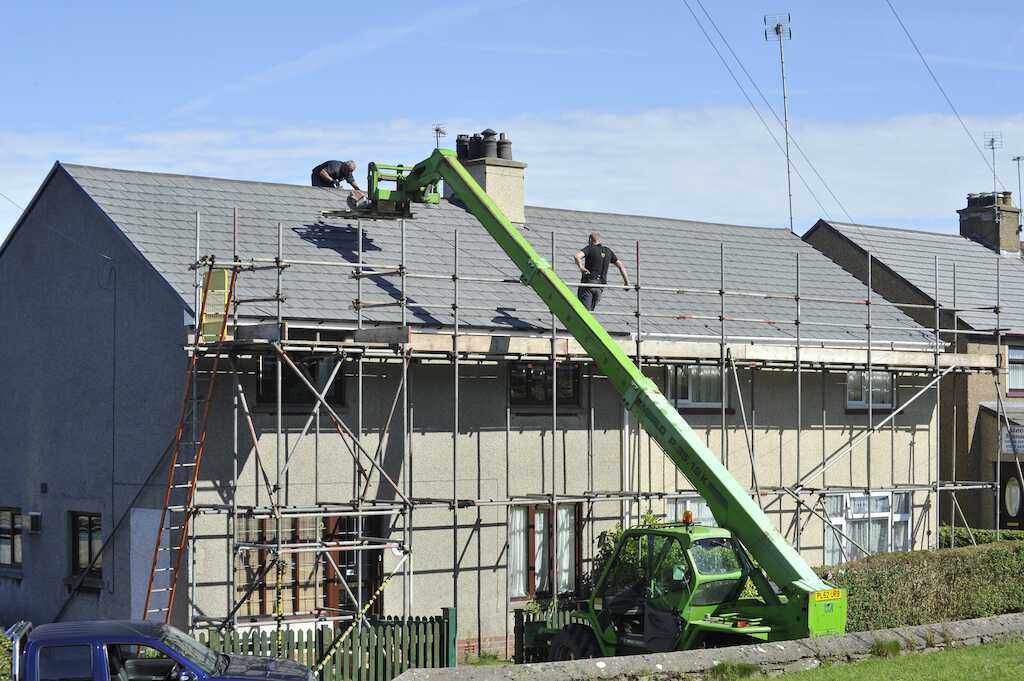
Learning how to find the best roofing contractor begins with prioritizing established local businesses. Local contractors maintain physical offices, hold established relationships with regional municipal code offices, and have a proven reputation within their communities.
At Mid-State Construction & Roofing, Inc., our industry-leading training, quality assurance, and hands-on project supervision ensure every roof installation meets manufacturer specifications and local building codes, preventing premature failure.
Essential Credentials, Licensing, and Red Flags to Avoid
Protect yourself by vetting any roofing company against essential industry benchmarks:
- State Licensing & Insurance: Verify that the contractor holds an active state roofing license. Always ask for current certificates of insurance showing both comprehensive General Liability and Workers’ Compensation coverage. If an uninsured worker is injured on your property, you could be held liable.
- Physical Business Location: Confirm a verifiable, local physical address. Transient contractors often use temporary P.O. boxes or shared workspaces.
- Manufacturer Certifications: Certified installers undergo continuous factory training and can offer extended non-prorated manufacturer warranties that uncertified handymen cannot provide.
- Beware of “Storm Chasers”: After severe storms, out-of-state crews frequently travel through neighborhoods offering door-to-door sales pitches. These transient outfits often deliver rushed work and leave town before workmanship defects surface.
- Deductible Schemes: Any contractor who offers to “waive,” “absorb,” or “rebate” your insurance deductible is committing insurance fraud. The deductible is the homeowner’s legal responsibility under the policy contract.
Key Questions to Ask When I Need a Roofer Fast
Before signing a contract or handing over a deposit, review these critical questions to ask your roofing contractor:
- Do you employ dedicated, on-site project supervision? Having a dedicated project manager on-site ensures quality control, OSHA compliance, and clear communication throughout the build.
- Will you perform a complete tear-off of the old roof? Applying a second layer of shingles over an existing roof traps heat, shortens shingle lifespan, and prevents the crew from inspecting the wood decking for rotted boards.
- What steps do you take to protect my property and clean up? Ensure the contract specifies protective tarps around landscaping, careful placement of trash dumpsters, and thorough magnetic roller sweeps to pick up stray roofing nails.
- Are you providing a detailed, line-item written estimate? An estimate should specify brand names, shingle styles, underlayment grades, ventilation hardware, and flashing materials.
- Will you provide a signed lien waiver upon final payment? A mechanics lien waiver protects you from being held liable if a contractor fails to pay their material supplier or crew.
Understanding Roof Costs, Material Durability, and Insurance Claims
Evaluating roof replacement options involves balancing upfront project costs against expected lifespan, maintenance demands, and weather resistance.
Understanding what is included in a roof replacement estimate helps you compare bids accurately. A comprehensive quote includes tear-off and disposal fees, underlayment, ice-and-water shields, metal drip edges, ridge vents, flashing, and labor.
| Roofing Material | Average Life Expectancy | Cost Tier (Installed) | Key Performance Characteristics & Suitability |
|---|---|---|---|
| Traditional 3-Tab Asphalt | 15–20 Years | Budget-Friendly | Basic weather protection; lower wind resistance (up to 60 mph); entry-level cost. |
| Architectural Shingles | 25–30 Years | Moderate / Best Value | Dimensional look; high wind ratings (up to 130 mph); excellent impact resistance. |
| Standing Seam Metal | 40–70 Years | Premium | Superior wind, hail, and fire protection; reflects solar heat; minimal maintenance. |
| Cedar Wood Shakes | 25–35 Years | High | Natural aesthetic; requires ongoing maintenance and specialized fire treatment. |
| Natural Slate Roofing | 50–100+ Years | Ultra-Premium | Extremely durable and elegant; requires heavy-duty structural framing support. |
Material Longevity and Pricing Breakdown
Residential asphalt shingles remain the most popular choice across the United States due to their affordability, aesthetic variety, and straightforward installation. Architectural (laminated) shingles feature a multi-layer design that provides enhanced wind and impact ratings compared to older 3-tab versions.
Metal roofing systems, such as standing seam panels with concealed fasteners, offer exceptional longevity in regions prone to extreme seasonal temperature shifts and severe thunderstorms. Metal efficiently reflects solar radiant heat, lowering attic temperatures and reducing cooling loads during hot summer months.
Slate and tile offer exceptional durability—often lasting 50 to 100 years or more—but their heavy weight requires verified structural roof trusses capable of carrying the load.
Regardless of the surface material chosen, long-term performance depends on what lies underneath: a heavy-duty synthetic underlayment, self-adhering ice-and-water shields in valleys and along eaves, and a balanced attic ventilation system combining intake soffit vents with exhaust ridge vents.
Navigating Homeowners Insurance and Claims (RCV vs. ACV)
When storm damage strikes, understanding how insurance claims work simplifies the restoration process. Insurance policies generally calculate payouts using one of two methods:
- Replacement Cost Value (RCV): Pays the full cost to repair or replace the damaged roof with comparable materials at current retail market prices, minus your agreed deductible. Payouts typically arrive in two disbursements: an initial check based on actual depreciated value, followed by the remaining recoverable depreciation once work is completed and invoiced.
- Actual Cash Value (ACV): Pays only the depreciated value of your roof based on its age and condition at the time of loss, minus your deductible. If a 15-year-old roof with a 20-year lifespan is destroyed, the insurer pays only a fraction of replacement costs, leaving you to cover the rest out of pocket.
To streamline this process, schedule a free roof inspection with an experienced local contractor before the adjuster arrives. Your roofer can document every damaged facet, meet the insurance adjuster on-site, and help ensure all required items—such as ice barrier membranes, flashing replacements, and local code upgrades—are included in the initial claim scope.
Frequently Asked Questions About Hiring a Roofer
How quickly can a roofer complete a roof replacement?
For an average-sized residential single-family home (1,500 to 2,500 square feet), an experienced, well-equipped roofing crew can typically complete a full tear-off and replacement in a single day, weather permitting.
Complex architectural designs, steep roof pitches, multiple chimneys or valleys, and extensive wood rot repairs on the underlying decking can extend the timeline to two or three days.
Before work begins, an established contractor will review the project timeline, protect your landscaping with tarps and netting, and ensure an efficient, organized cleanup.
Do I need a building permit for roof repair or replacement?
In most municipalities and counties, minor shingle patches do not require a permit, but full roof replacements and structural roof decking alterations require a building permit from your local building and zoning department.
A licensed contractor will manage the permitting process, file the required paperwork, pull the permit before work begins, and schedule the required municipal building inspections upon project completion to certify that all work complies with local building codes.
What warranties should be included with a new roof?
A complete new roof installation should come with two distinct warranty protections:
- Manufacturer Material Warranty: Covers product manufacturing defects, granule loss, and wind blow-offs. Depending on the product line, shingle warranties typically range from 25 years to Lifetime Limited coverage. Premium certified installations often include extended non-prorated periods covering both replacement materials and factory labor.
- Contractor Workmanship Warranty: Covers the installation craftsmanship provided by the roofing crew. A reputable contractor provides a clear, written workmanship guarantee (often ranging from 5 to 25 years) ensuring that any installation-related leaks or issues are corrected at zero cost to the homeowner.
Conclusion
Facing an unexpected roof leak or storm-damaged shingles can feel overwhelming, but taking prompt, informed action keeps your home protected and your repair project on track. By taking immediate steps to contain interior water intrusion, documenting all damage, and working with a licensed local roofer, you can avoid costly secondary repairs and navigate insurance claims with confidence.
At Mid-State Construction & Roofing, Inc., we are dedicated to providing the highest standard of residential and commercial roofing across Central Illinois. From rapid emergency repairs to full roof replacements, our certified crews, dedicated project supervision, and quality assurance processes ensure your home is built to withstand the elements for decades to come. Reach out to our team today to schedule your comprehensive roof evaluation.